Excerpt: Discover how ceramic tableware retailers can expand dinnerware collections through coordinated shapes, sizes, colors, and product combinations without creating unnecessary SKUs.
Expanding a ceramic dinnerware collection can help retailers attract new customers, offer more purchasing options, and increase sales opportunities. However, adding more products does not always mean building a better collection.
Too many similar designs can make inventory management more complicated, increase purchasing costs, and create overlapping product choices. For retailers, the challenge is to offer enough variety while keeping the collection organized and commercially practical.
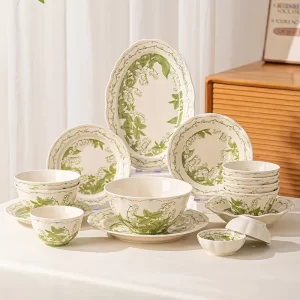
Instead of introducing a completely new design for every product, retailers can expand their مجموعات أواني المائدة الخزفية by developing combinations around existing styles, colors, and product categories.
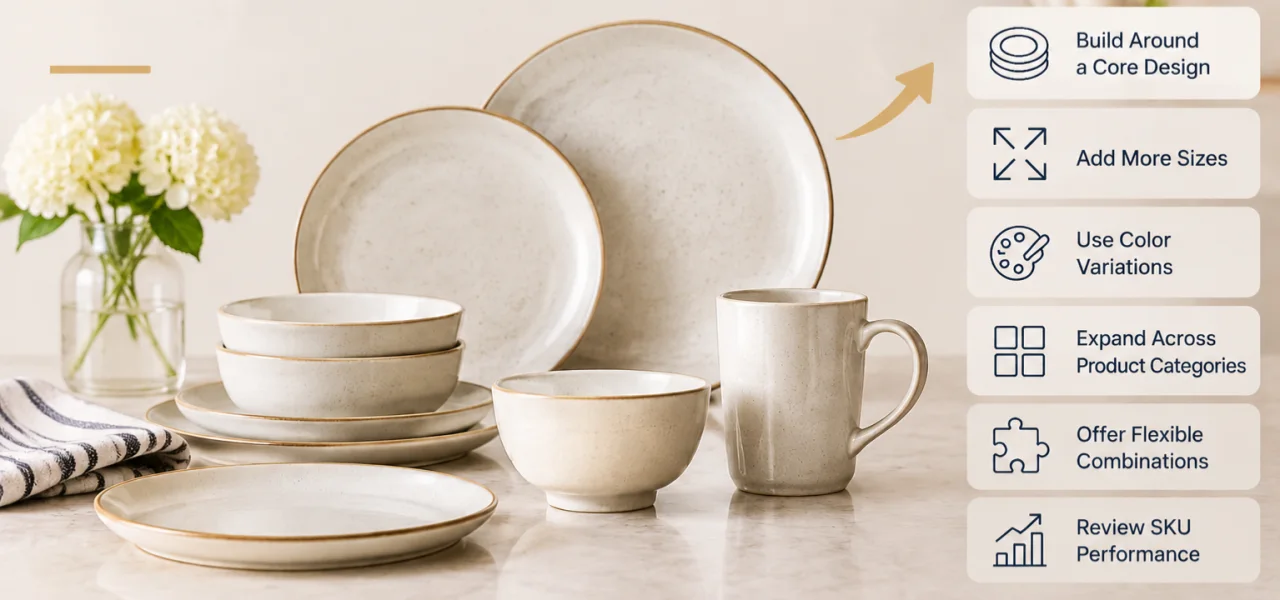
1. Build Around a Core Dinnerware Design
A well-planned collection usually starts with a few core products rather than dozens of unrelated designs.
For example, a retailer may begin with a coordinated dinnerware style that includes:
- أطباق العشاء
- الألواح الجانبية
- Soup plates or bowls
- أطباق الحبوب
- أوعية التقديم
These products provide the foundation of a collection. Retailers can then expand the range by adding complementary pieces instead of introducing an entirely different design.
This approach creates more opportunities for customers to purchase matching tableware while keeping the overall product range easier to manage.
For wholesale buyers, it is also worth considering whether a supplier can provide multiple product types with a coordinated appearance.

2. Add More Sizes Instead of More Designs
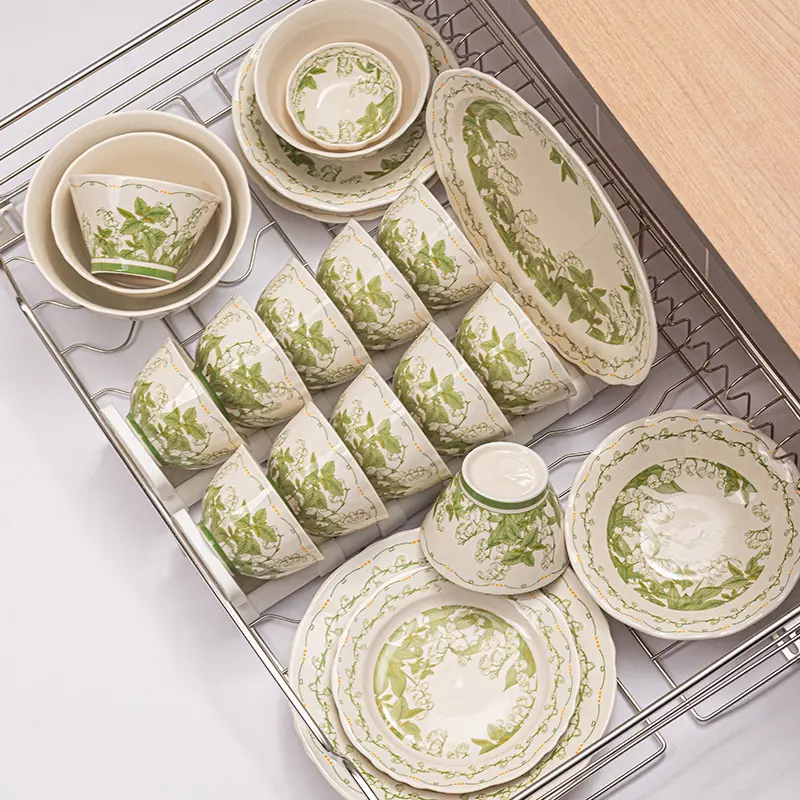
Different customers may need different product sizes, even when they prefer the same overall style.
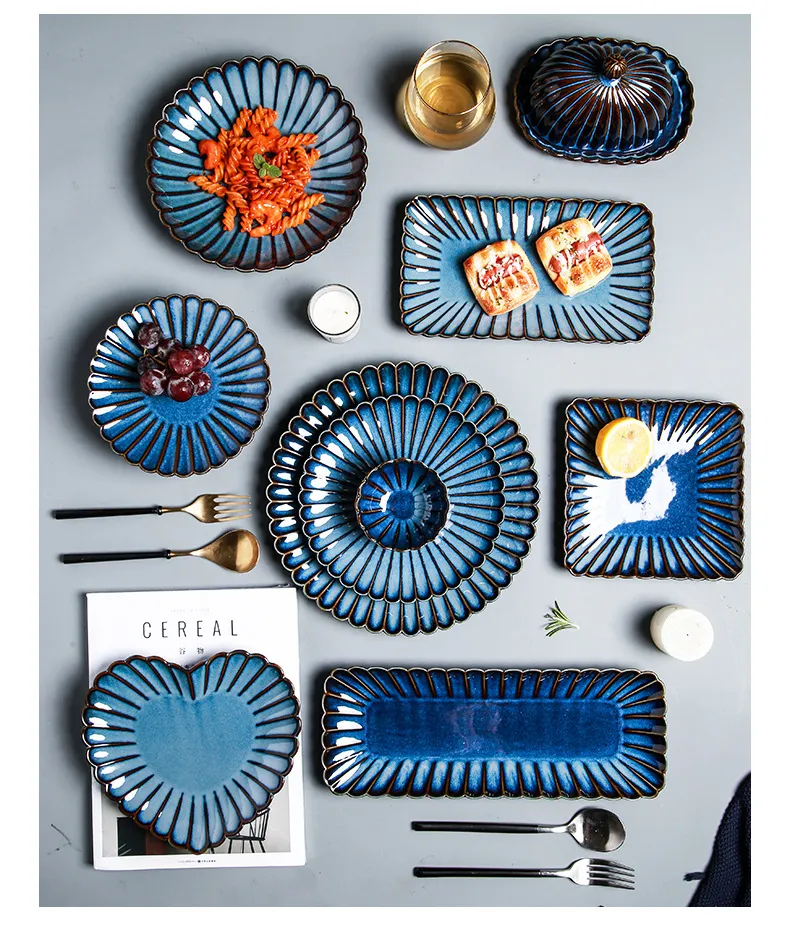
For instance, a ceramic dinnerware range may include:
- أطباق عشاء كبيرة للأطباق الرئيسية
- Smaller plates for breakfast, desserts, or side dishes
- Deep bowls for soup and pasta
- Smaller bowls for cereal, snacks, or individual servings
Expanding through size variations can make an existing design more useful across different dining occasions.
The key is to select sizes that serve distinct purposes. Adding several products with nearly identical dimensions may increase SKU numbers without giving customers meaningful additional choices.
Retailers should also consider how the sizes work together when displayed or sold as a set.


3. Use Color Variations to Create Collection Options
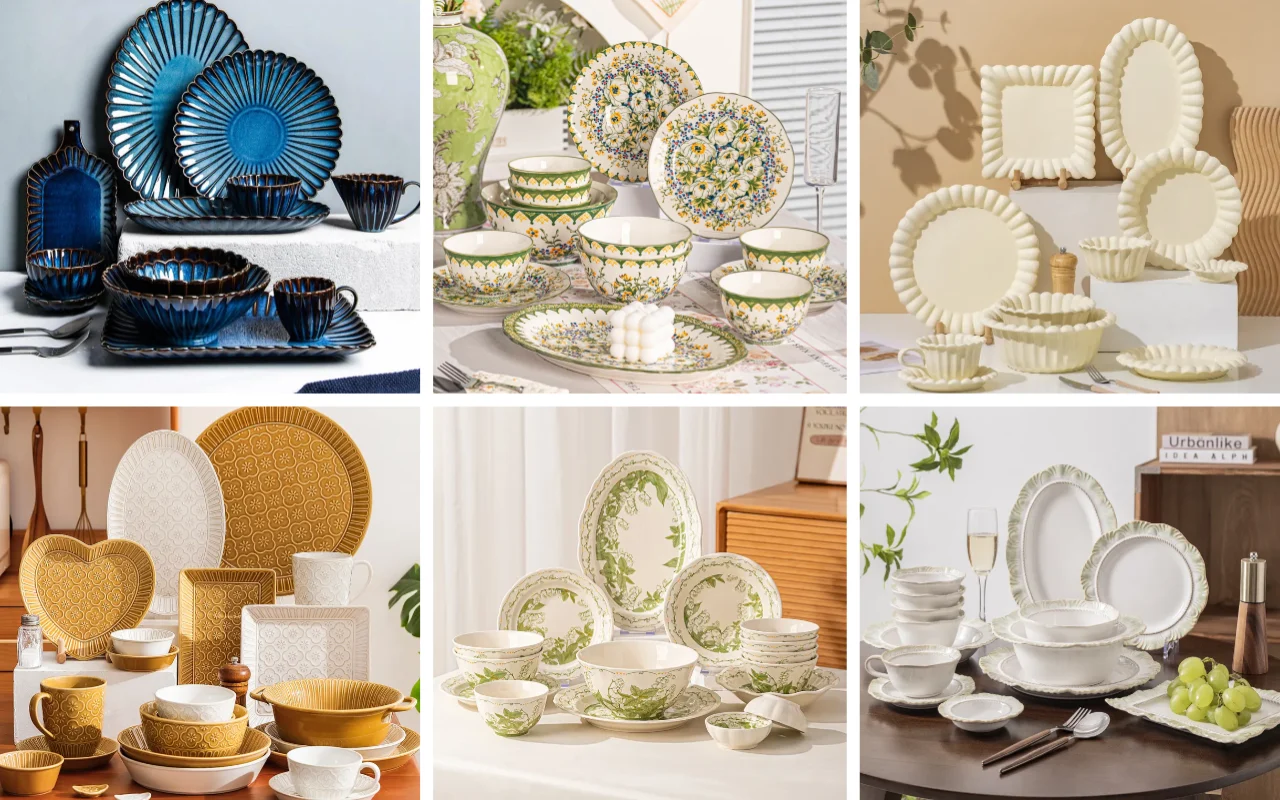
Color is another way to expand a ceramic dinnerware range without changing its basic shape.
A single plate or bowl design may be available in different glaze colors or finishes, allowing retailers to create multiple product options around the same form.
Some possible collection directions include:
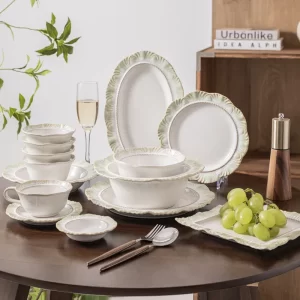
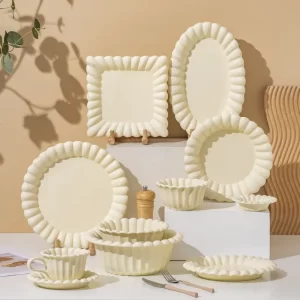
- Neutral colors for minimalist homeware ranges
- Blue and white combinations for classic table settings
- Earthy tones for natural or rustic styles
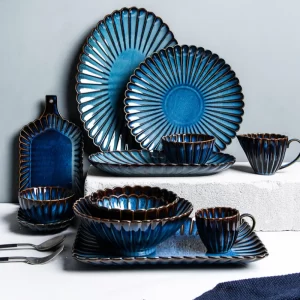
- Reactive glaze finishes for more decorative collections
Retailers can choose a focused color palette rather than offering too many unrelated colors.
For example, a collection built around three complementary colors may provide enough variety for mix-and-match table settings while keeping purchasing and inventory decisions manageable.
When selecting color variations, buyers should confirm which finishes are available for each product and whether the colors can be coordinated across different shapes.
4. Expand Across Product Categories with a Consistent Style
A dinnerware collection does not need to consist entirely of plates and bowls. Adding complementary ceramic products can help retailers serve more customer needs without introducing unrelated designs.
Depending on the target market, a coordinated collection may include:
| Product Category | Role in the Collection |
|---|---|
| اللوحات | Everyday dining and serving |
| الأوعية | Soup, cereal, snacks, and individual meals |
| Cups and mugs | Coffee, tea, and everyday beverages |
| Baking dishes | Oven-to-table serving |
| Serving pieces | Shared meals and table presentation |
The advantage is that these categories can complement one another through similar colors, glaze finishes, or design details.
For example, a retailer selling a neutral ceramic dinnerware range could introduce matching mugs and serving bowls to create a more complete tableware collection.
The objective is not to offer every possible ceramic product. It is to select products that make sense together and appeal to the same customer group.
5. Create Flexible Product Combinations Instead of Too Many Fixed Sets
Some retailers focus heavily on complete dinnerware sets. However, individual buyers may have different household sizes, dining habits, and purchasing preferences.
Offering flexible combinations can help retailers serve these customers without creating a large number of separate product designs.
على سبيل المثال:
- A basic combination of dinner plates and bowls
- An expanded set with side plates and serving pieces
- A beverage combination with matching cups and mugs
- Mix-and-match options using coordinated colors
Retailers can use the same core products in different combinations to create more purchasing options.
This can also make it easier to test which combinations perform well before committing to larger orders.
When planning wholesale purchases, confirm whether the supplier can provide the required individual pieces and quantities for each combination.
6. Review SKU Performance Before Expanding Further
A larger collection should support sales, not simply increase product complexity.
Before introducing new products, retailers should review the performance of their existing range.
Useful questions include:
- Which designs generate the most repeat orders?
- Which sizes are most popular?
- Are customers purchasing matching bowls, plates, and cups?
- Do certain colors sell more consistently?
- Are some products too similar to justify separate SKUs?
Products with overlapping designs or weak sales performance may not need further expansion.
A focused collection makes it easier to manage stock, plan replenishment, and present products clearly to customers.
Expand Your Ceramic Dinnerware Range with Yongjian Ceramics
سيراميك يونغجيان is a ceramic tableware manufacturer offering a broad range of wholesale products, including ceramic plates, bowls, cups, mugs, baking dishes, and other tableware.
With more than 10,000 stock products, retailers and wholesalers can explore different product styles and categories when developing or expanding their collections.
Rather than adding unrelated designs, buyers can discuss coordinated product selections, suitable combinations, and customization options based on their target market and purchasing requirements.
Whether you are building a new dinnerware range or adding complementary products to an existing collection, Yongjian can help you explore ceramic tableware options for bulk purchasing.