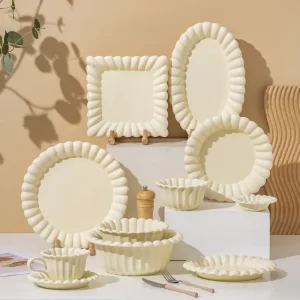
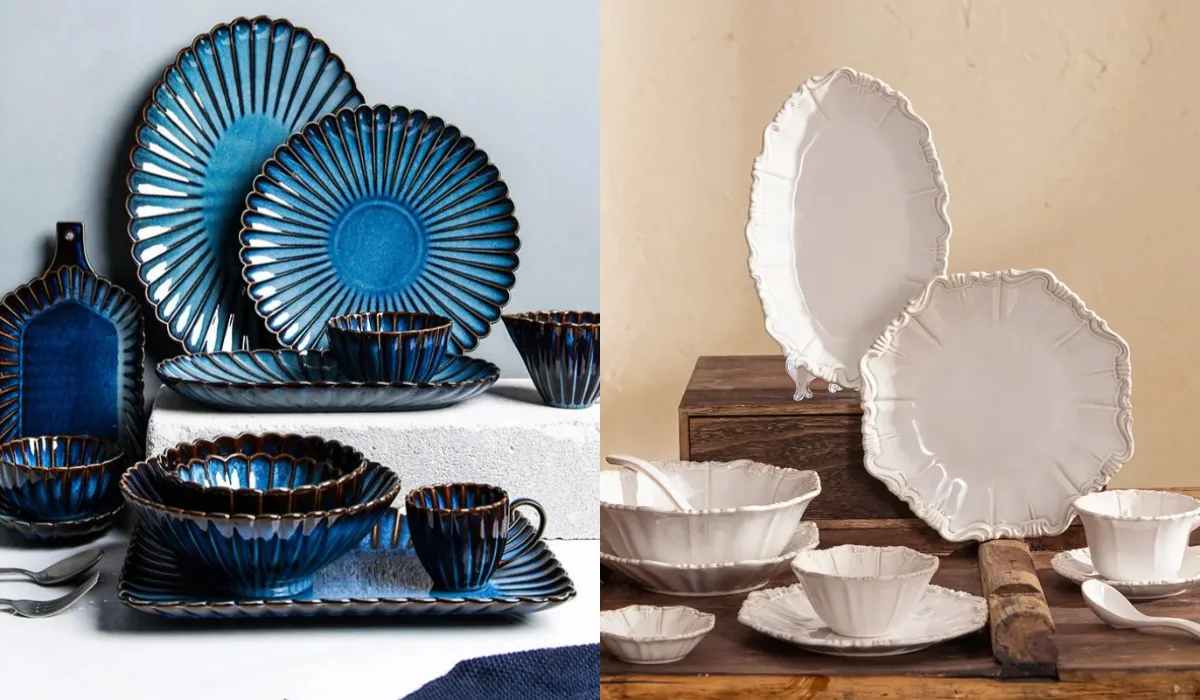
Introduction : Le choix de la vaisselle pour un restaurant ne se résume pas à une simple question d'esthétique.
Pour les restaurants, les hôtels, les cafés et les enseignes de restauration, la vaisselle ne sert pas seulement à présenter les plats, mais influe également directement sur la mise en scène des plats, le style de la table et l'image de marque. En particulier lors de l'achat de vaisselle en gros, les acheteurs doivent souvent tenir compte du design, de la durabilité, du nettoyage et de l'entretien, de la facilité de réapprovisionnement et du coût d'achat.
Ces dernières années, Vaisselle à glaçure réactive a connu un succès croissant sur les marchés de la restauration et de la gastronomie grâce à ses variations de couleurs naturelles, ses glaçures aux nuances riches et ses textures artisanales. À l'inverse, la vaisselle « Solid Glaze » présente une couleur et un rendu visuel plus uniformes, ce qui la rend plus adaptée aux chaînes de restaurants, aux hôtels et aux environnements commerciaux qui exigent un style de table standardisé.
Alors, est-ce que… Vaisselle à glaçure réactive Est-ce vraiment un meilleur choix que Solid Glaze pour les restaurants ? La réponse ne se résume pas à un simple “ oui ” ou “ non ”. Le choix approprié dépend du positionnement du restaurant, du style de sa carte, de la fréquence d'utilisation, de son budget et de ses besoins ultérieurs en matière de réapprovisionnement.
1. Quelle est la différence entre la vaisselle à glaçure réactive et celle à glaçure unie ?
La différence la plus évidente entre les deux réside dans l'effet de glaçure.
Vaisselle à glaçure réactive utilise généralement un procédé de glaçure réactive. Au cours de la cuisson, les différentes compositions de glaçure produisent des variations de couleur naturelles, des dégradés, des effets marbrés ou texturés. Les produits issus d’un même lot, même avec la même glaçure de base, peuvent présenter des nuances et des textures légèrement différentes. Cette particularité visuelle, qui fait que chaque pièce n’est “ pas exactement identique ”, constitue tout le charme de la vaisselle à glaçure réactive.
La gamme « Solid Glaze » met l'accent sur l'uniformité des couleurs. Par exemple, le blanc pur, le beige, le noir ou une couleur spécifique à une marque peuvent conférer une apparence plus harmonieuse à l'ensemble. Cette uniformité constitue un avantage indéniable pour les restaurants qui doivent s'approvisionner en gros et veiller à l'uniformité de la décoration de leurs tables.
Il convient d'être particulièrement vigilant lors de l'achat : le fait qu'un émail soit « réactif » ne signifie pas que chaque produit sera totalement différent, ni que la qualité soit irrégulière. Les fabricants de céramique traditionnels gèrent la gamme de couleurs grâce à la composition de l'émail, à la température de cuisson et au contrôle du four, mais les acheteurs doivent tout de même vérifier que plage admissible de différences de couleur et de variations de texture avant de passer commande.
Par conséquent, si le restaurant mise sur une ambiance naturelle, artisanale et unique, vous pouvez privilégier Vaisselle à glaçure réactive; si la marque met l'accent sur la netteté, l'uniformité et la standardisation, Solid Glaze est généralement plus adapté.
2. Quel type de vaisselle convient le mieux aux différents types de restaurants ?
Le positionnement d'un restaurant est l'un des facteurs les plus importants à prendre en compte lors du choix de la vaisselle.
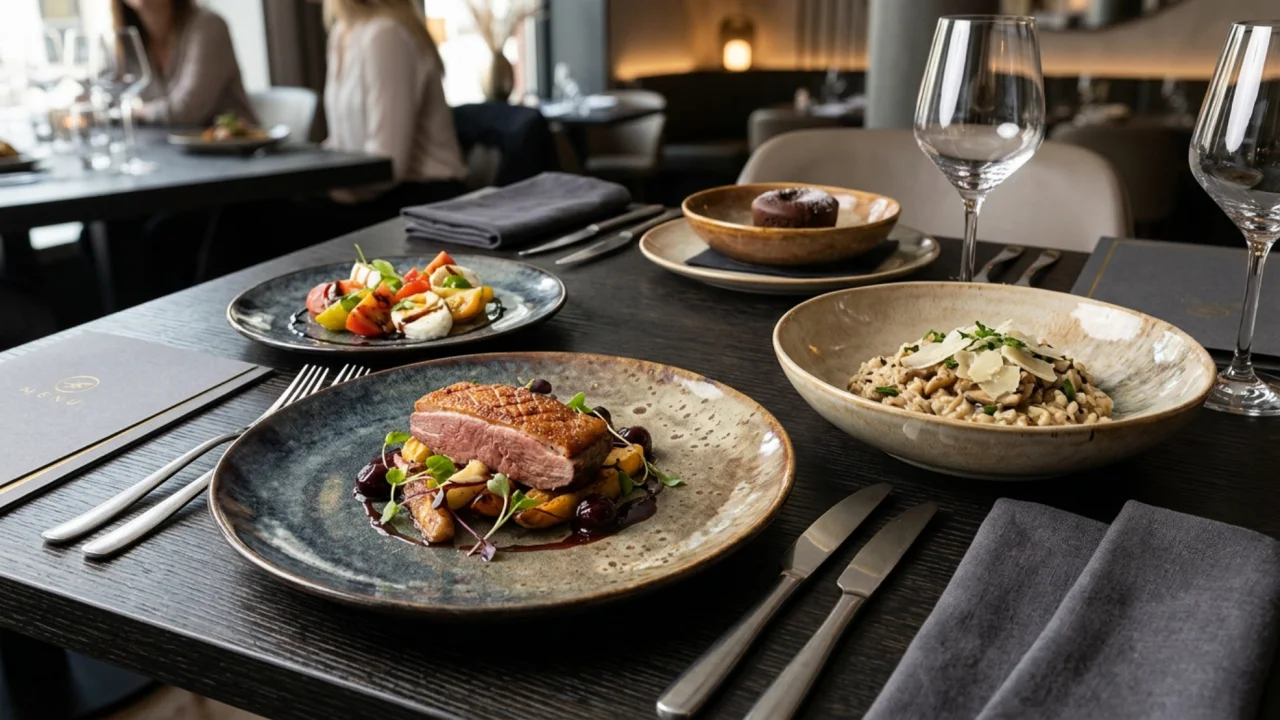
Pour les restaurants de charme, les restaurants occidentaux modernes, les cafés spécialisés et la restauration hôtelière, Vaisselle à glaçure réactive Il est souvent plus facile de créer des présentations de table haut de gamme et reconnaissables. Par exemple, un plat recouvert d’un glaçage réactif à dégradé bleu-gris peut mettre en valeur la hiérarchie visuelle des fruits de mer, des sushis, des desserts et d’autres plats ; un glaçage réactif beige ou marron convient très bien aux pâtisseries, au pain, aux pâtes et aux plats rustiques.
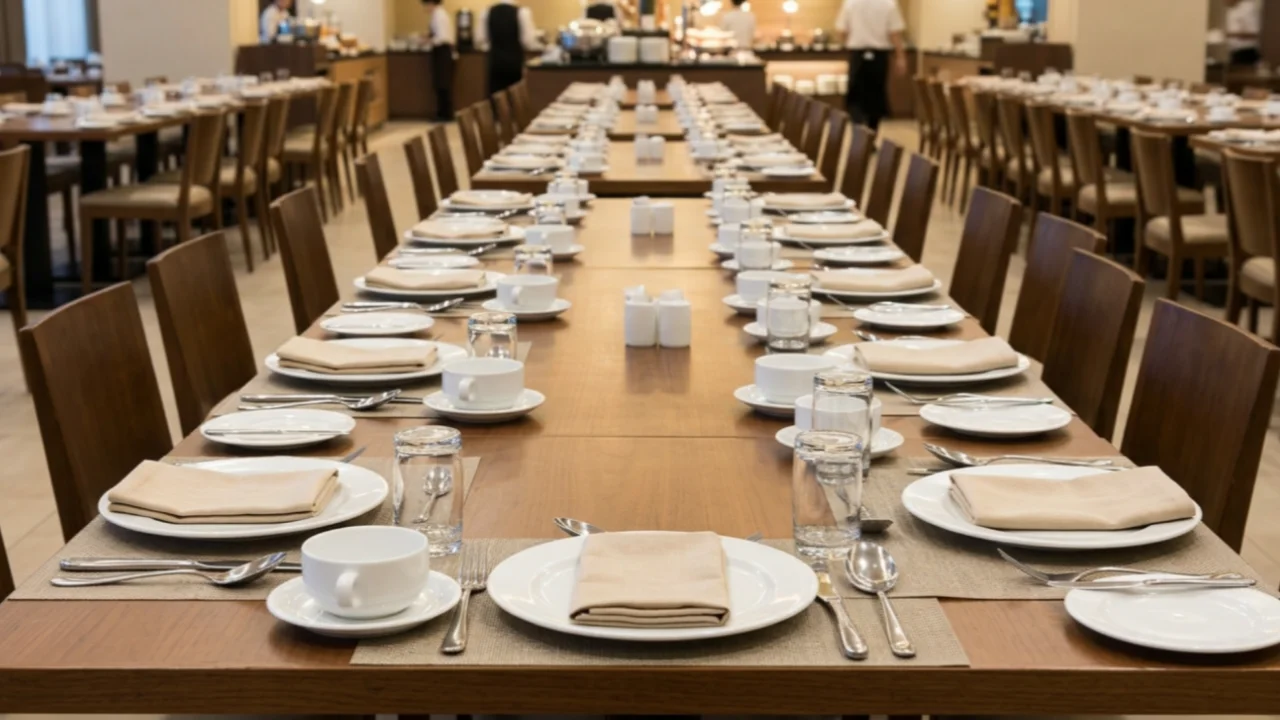
En revanche, la gamme Solid Glaze convient davantage aux chaînes de restaurants, aux enseignes de restauration rapide, aux hôtels d'affaires et aux projets de restauration à grande échelle. Ce type de client a généralement besoin de centaines, voire de milliers de pièces de vaisselle, et souhaite une homogénéité d'un établissement à l'autre. L'uniformité des couleurs facilite également la gestion visuelle pour les marques.
Lors de vos achats, vous pouvez fonder vos choix sur “ le ton de la marque + le type de menu + l'ambiance du restaurant ” :
- Marques haut de gamme, naturelles et artisanales : la priorité sera donnée aux Vaisselle à glaçure réactive
- Chaînes et marques standardisées : Solid Glaze est plus facile à gérer
- Cafés et restaurants gastronomiques : une petite quantité de glaçure réactive peut être choisie pour la vaisselle de luxe.
- Hôtels et grands projets : il est recommandé d'assortir deux types de carrelage en fonction des différents espaces de restauration
- Menu de saison : la vaisselle à glaçure réactive permet de créer des tables à thème en édition limitée
Les restaurants disposant d’un budget limité mais souhaitant améliorer l’aspect de leurs tables peuvent également opter pour la combinaison “ produit de base Solid Glaze + produit spécialisé Reactive Glaze ” afin de renforcer les contrastes visuels tout en maîtrisant les coûts.
3. Comment faut-il tenir compte de la durabilité, du nettoyage et d’une utilisation fréquente ?
Ne vous fiez pas uniquement aux photos lorsque vous achetez de la vaisselle pour un restaurant. Dans le secteur de la restauration professionnelle, l’utilisation intensive, le nettoyage, l’empilage et la manipulation quotidiens imposent des exigences plus élevées à la vaisselle en céramique.
En réalité, la résistance de la vaisselle ne peut pas être évaluée uniquement en fonction de la présence d’un “ émail réactif ” ou d’un “ émail solide ”. Pâte céramique, température de cuisson, composition de l'émail, association de l'émail et de la pâte, et structure du produit auront tous une incidence sur les performances finales.
Les acheteurs doivent accorder une attention particulière aux indicateurs suivants :
- Résistance des bords: Le bord de l'assiette et l'ouverture du bol sont les endroits où les chocs sont les plus susceptibles de se produire lors de l'utilisation au restaurant.
- Stabilité de l'émail: Le nettoyage à haute fréquence ne devrait entraîner aucune altération anormale visible.
- Cohérence dimensionnelle: Lorsqu'elles sont empilées en grandes quantités, des différences de taille trop importantes peuvent poser des problèmes de stockage et de transport.
- Poids du produit: Un poids excessif alourdira la charge de travail des employés lors de la manutention et du nettoyage.
- Adaptabilité aux différents cas d'utilisation: Si vous devez utiliser un lave-vaisselle, un micro-ondes ou un four, vous devez vérifier au préalable auprès du fournisseur si le produit en question est compatible.
Par ailleurs, les acheteurs ne doivent pas évaluer l'ensemble d'un lot de produits sur la seule base d'un échantillon fourni par le fournisseur. Pour les commandes en gros, il est recommandé de demander aux fournisseurs de confirmer les normes applicables au lot et de valider les échantillons ou les nuanciers avant le lancement de la production en série.
Si vous choisissez Vaisselle à glaçure réactive, vous devez vérifier précisément si le changement de couleur résulte d'un effet normal du processus de fabrication. Pour les produits à émail réactif, l'exigence selon laquelle “ chaque pièce doit être exactement identique ” n'est généralement pas raisonnable en matière de qualité, mais la plage visuelle acceptable doit être définie à l'avance.
4. Coût, quantité minimale de commande et réapprovisionnement : quelle est l'option la plus flexible lors d'un achat en gros ?
Pour les restaurateurs, le coût de achat de vaisselle ne se limite pas au prix unitaire, mais englobe également les coûts liés aux stocks, au transport, aux pertes et au réapprovisionnement qui en découle.
Les produits « Solid Glaze » permettent généralement d'assurer plus facilement un approvisionnement stable en grande série grâce à un niveau plus élevé de standardisation de la production. Vaisselle à glaçure réactive implique un contrôle plus complexe des effets de la glaçure, et certains styles peuvent être soumis à des exigences plus strictes en matière de production et de contrôle qualité. Par conséquent, les prix de ces deux types de produits ne peuvent pas être déterminés simplement en fonction du type de glaçure, mais doivent être évalués de manière globale en tenant compte de la taille, de la forme, du savoir-faire, de l'emballage et de la quantité commandée.
Pour les acheteurs, la quantité minimale de commande (MOQ) revêt également une grande importance. Les grandes chaînes de restauration peuvent obtenir des prix plus compétitifs grâce à des achats en gros, mais les petits et moyens restaurants, les marques émergentes de restauration et les nouveaux projets ne souhaitent souvent pas s'engager à acheter d'emblée de grandes quantités de stock.
C'est également un élément dont il faut tenir compte lors du choix d'un fournisseur en gros de vaisselle en céramique.
Il est recommandé aux acheteurs de fournir les informations suivantes en une seule fois lorsqu'ils effectuent une demande de renseignements :
- Type et taille du produit
- Quantité d'achat estimée
- Marché cible
- Avez-vous besoin d'un logo ou d'un emballage ?
- Qu'une couleur ou un émail spécifique soit requis ou non
- S'il est nécessaire de réapprovisionner
- Délai de livraison prévu
De plus, ne vous contentez pas de demander “ quelle est la quantité minimale de commande (MOQ) ”, mais renseignez-vous également sur la MOQ des différents modèles, les règles d'achat mixte et les conditions de réapprovisionnement ultérieur. Une MOQ flexible peut aider les restaurants à augmenter progressivement leurs achats en fonction de leurs ventes réelles, plutôt que de devoir constituer des stocks à l'avance pour respecter les quantités minimales exigées par l'usine.

5. Comment choisir le service de table en céramique adapté à votre restaurant ?
Si un restaurant hésite entre deux types de vernis, il n'est pas vraiment nécessaire de “ choisir l'un ou l'autre ”. Une méthode plus pratique consiste à associer les produits en fonction de l'usage de la table.
Par exemple, un restaurant occidental moderne peut utiliser Solid Glaze pour environ 70% d'assiettes et de bols de base afin de garantir l'uniformité du service quotidien ; puis utiliser environ 30% de Vaisselle à glaçure réactive comme assiettes de plat principal, assiettes à dessert ou vaisselle pour menus spéciaux.
Une autre possibilité consiste à faire votre choix par catégorie de menu :
*Entrée : utilisez l'assiette « Reactive Glaze » en respectant la hiérarchie visuelle
- Salades et entrées : optez pour des bols et assiettes « Solid Glaze » au design épuré
- Desserts : utilisez de la vaisselle à glaçure réactive, d'une couleur ou d'une texture originale.
*Petit-déjeuner et buffet : la priorité sera donnée à « Solid Glaze », qui permet une gestion uniforme et aisée - Menu saisonnier en édition limitée : utilisez des couleurs de nappage spéciales pour créer des thèmes visuels
Les acheteurs peuvent également demander aux fournisseurs de leur proposer des assortiments de différentes formes et couleurs, tels que des assiettes rondes, ovales, creuses, des saladiers, des bols à soupe, des mugs et des plats à four, etc., afin de constituer une gamme complète d'articles de table.
Pour les restaurants qui souhaitent créer leur propre gamme de vaisselle de marque, il est généralement plus facile d’assurer une gestion homogène des couleurs, des dimensions, des emballages et du logo en travaillant directement avec un professionnel. fabricant de vaisselle en céramique plutôt que de se contenter d’acheter des produits tout prêts.
Conclusion : glaçure réactive ou glaçure solide, il n'y a pas de réponse définitive.
Alors, lequel convient le mieux aux restaurants, Vaisselle à glaçure réactive ou un vernis opaque ?
Si votre marque met en avant des textures naturelles, uniques, haut de gamme et artisanales, Vaisselle à glaçure réactive peut contribuer à faire de la table un élément marquant sur le plan visuel ; si votre restaurant accorde davantage d'importance à la standardisation, aux achats en gros, à l'uniformité de l'image de marque et à la gestion des stocks, Solid Glaze s'avère généralement plus pratique.
Pour la plupart des clients du secteur de la restauration collective, la meilleure option n’est pas d’opter pour un seul modèle, mais d’en combiner plusieurs en fonction du menu, de la fréquence d’utilisation et du positionnement du restaurant. Avant d’effectuer votre achat, vous devriez vous attacher à vérifier la matière céramique, les tolérances dimensionnelles, l’aspect de l’émail, la durabilité, l’emballage, la quantité minimale de commande (MOQ) et la capacité de réapprovisionnement, plutôt que de vous contenter de comparer le prix d’une seule pièce.
En particulier pour les enseignes de restauration qui passent commande pour la première fois ou qui s'apprêtent à tester une nouvelle gamme, le choix d'un fournisseur en gros de vaisselle en céramique proposant des quantités minimales de commande flexibles peut réduire la pression sur les stocks et permettre à l'enseigne d'augmenter progressivement ses commandes en fonction des réactions du marché.
FAQ
Chaque pièce de la vaisselle « Reactive Glaze » sera-t-elle différente ?
incertain. Les produits à glaçure réactive présentent souvent des variations naturelles de couleur et de texture, mais les usines professionnelles contrôlent la gamme globale grâce aux processus de glaçure et de cuisson. Avant tout achat, il convient de vérifier les normes admissibles en matière de différence de couleur et de variation de texture entre l'échantillon et le produit en vrac.
La vaisselle « Reactive Glaze » est-elle adaptée aux restaurants à forte fréquentation ?
Oui, mais la durabilité ne peut pas être évaluée uniquement en fonction de la “ glaçure réactive ”. Lors de l'achat, vous devez également vérifier le corps en céramique, le procédé de cuisson, la qualité de la glaçure et si le produit en question est adapté à un usage professionnel, notamment au lave-vaisselle.
Un restaurant devrait-il opter pour un vernis solide ou un vernis réactif ?
Si vous privilégiez l'uniformité de la marque et une gestion standardisée, la gamme « Solid Glaze » est plus adaptée ; si vous privilégiez les différences visuelles et une image haut de gamme, la gamme « Reactive Glaze » présente davantage d'avantages. Combiner les deux constitue également une stratégie d'achat très judicieuse.
Comment réduire le risque lié aux stocks lors du premier achat de vaisselle d'un restaurant ?
Vous pouvez privilégier les fournisseurs proposant des quantités minimales de commande (MOQ) flexibles, commencer par acheter les modèles de base, puis ajouter des modèles spécialisés en fonction des ventes et de l'utilisation. Avant de passer commande, vérifiez les règles de mixité, le cycle de réapprovisionnement et la quantité minimale de commande pour chaque produit.
Vente en gros de vaisselle en céramique par Yongjian Ceramics
Céramique de Yongjian a été fondée en 1990. Il s'agit d'une fabricant de vaisselle en céramique fort d'une grande expérience dans la production et la vente en gros. Depuis longtemps, elle fournit à ses clients du monde entier une large gamme d'articles de table, tels que des assiettes en céramique, des bols en céramique, des tasses en céramique, des plats de cuisson en céramique et des cuillères en céramique. Yongjian a Plus de 10 000 produits prêts à l'emploi, qui sont vendus à plus de 100 pays, et est en mesure de répondre aux besoins d'achat des restaurants, hôtels, grossistes, importateurs et propriétaires de marques en matière de styles variés et de gammes de tables de salle à manger.

Outre une large gamme de produits prêts à l'emploi, Yongjian propose également des solutions personnalisées flexibles, notamment en matière de couleur, de glaçure, de logo, d'emballage et de conception des produits. Pour les acheteurs qui souhaitent réduire la pression sur leurs stocks, Yongjian propose quantité minimale de commande (QMC) plus faible et flexible. La quantité minimale de commande varie en fonction du type de produit et des conditions de la commande. Il est recommandé de contacter directement l'équipe commerciale pour obtenir confirmation avant de passer commande.
Si vous recherchez un cefournisseur de vaisselle en céramique qui peut offrir à la fois Vaisselle à glaçure réactive, vente en gros de vaisselle en céramique et des solutions d'approvisionnement flexibles, Céramique de Yongjian Nous pouvons vous proposer des solutions adaptées en matière de sélection de produits et de devis, en fonction du positionnement de votre restaurant, de votre gamme de produits et de vos quantités d'achat.
-

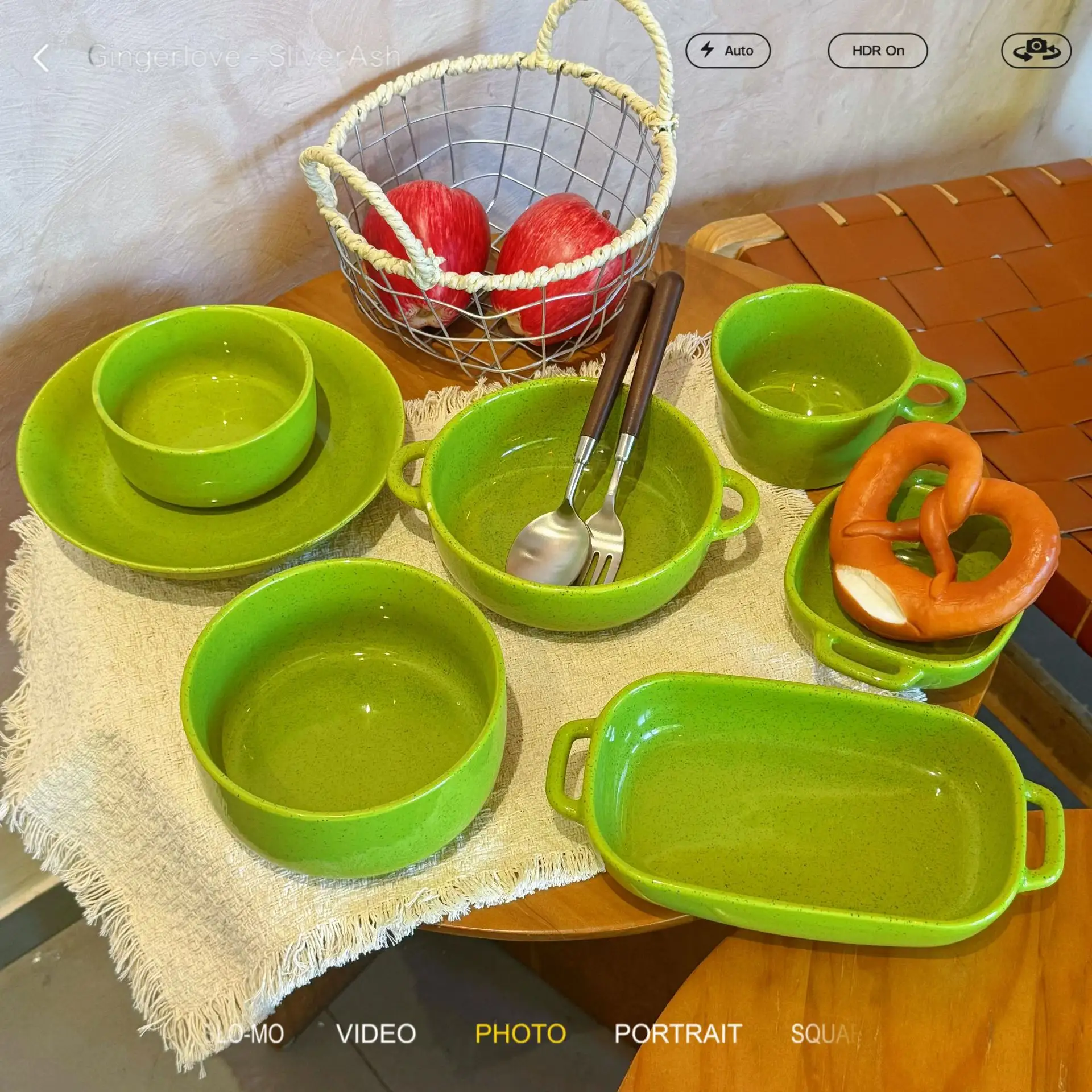
Lot de 7 pièces de vaisselle en céramique verte, vente en gros, utilisable au micro-ondes
-

7.5 Inch Gradient Wholesale Pasta Bowls, Ceramic Bowls Bulk
-
8 Inch Deep Serving Plates Wholesale, Round Plates In Bulk (assiettes rondes en vrac)
-
8 Inch Wholesale Serving Plates, Exquisite Kiln-Fired Dinner Plate Bulk