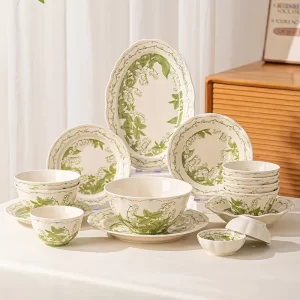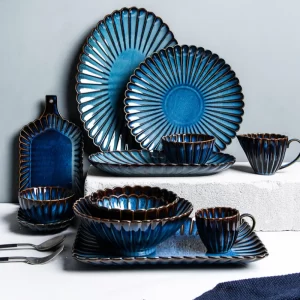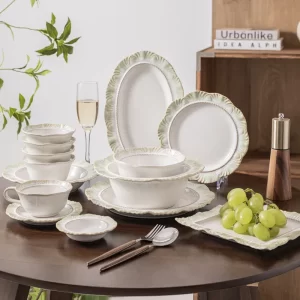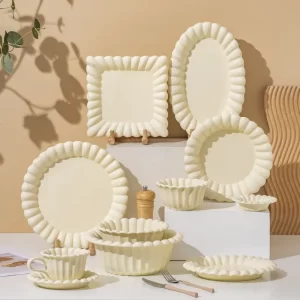
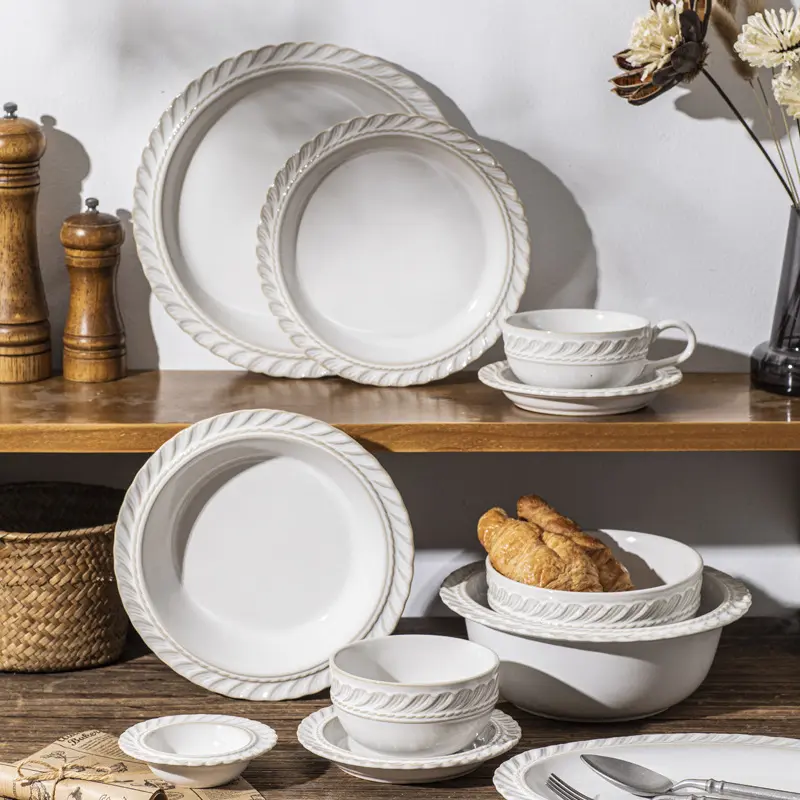
A retail-ready ceramic dinnerware collection should balance customer preferences, coordinated designs, practical SKU selection, price positioning, packaging, and replenishment. For European homeware stores, buyers should prioritize versatile tableware, cohesive colors and shapes, manageable SKU depth, and a reliable ceramic dinnerware supplier that can support wholesale orders, customization, and repeat supply.
What Makes a Ceramic Dinnerware Collection Retail-Ready?
A ceramic dinnerware collection is not simply a group of plates, bowls, and cups with similar designs. For a homeware retailer, the collection needs to work as a sellable product range.
Customers should be able to combine pieces naturally, while retailers need enough product variety to create an attractive display without carrying unnecessary SKUs.
A retail-ready ceramic dinnerware collection should therefore balance four factors:
- Customer appeal
- Product coordination
- Commercial pricing
- Supply and replenishment
For European homeware stores, this balance is particularly important because buyers often need products that can work across different dining styles, household sizes, and retail price segments.
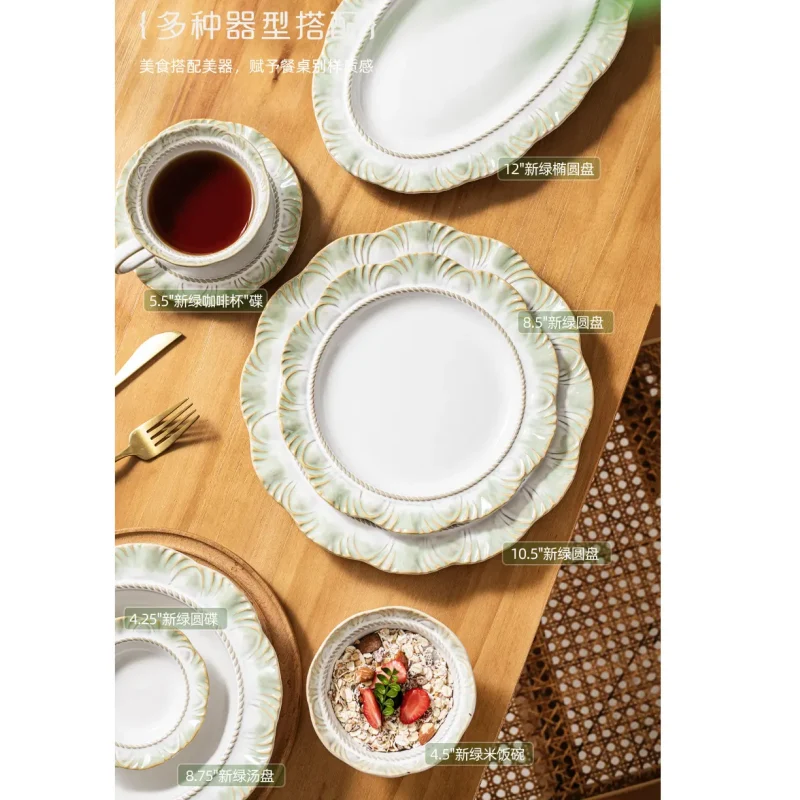
Step 1: Define the Target Customer Before Selecting Products
The first question should not be:
Which ceramic dinnerware designs should we buy?
Instead, ask:
Who is the collection designed for?
A collection targeting young urban households may favor simple shapes, neutral colors, and versatile individual pieces. A premium homeware retailer may need more distinctive forms, refined finishes, and gift-ready packaging.
Before contacting a ceramic dinnerware supplier, define:
Target Price Range
Determine the expected retail price for individual pieces and sets.
Customer Lifestyle
Consider whether the collection is intended for:
- Everyday family dining
- Casual entertaining
- Modern apartments
- Premium homeware
- シーズンコレクション
- Gift-oriented retail
Design Direction
Decide whether the range should be:
- ミニマリスト
- Rustic
- 現代
- Classic
- Natural
- Color-focused
This gives the supplier a practical direction instead of a vague request for “European-style dinnerware.”


Step 2: Build a Core SKU Structure
A common mistake is adding too many products at the beginning.
A better approach is to establish a core ceramic dinnerware collection first.
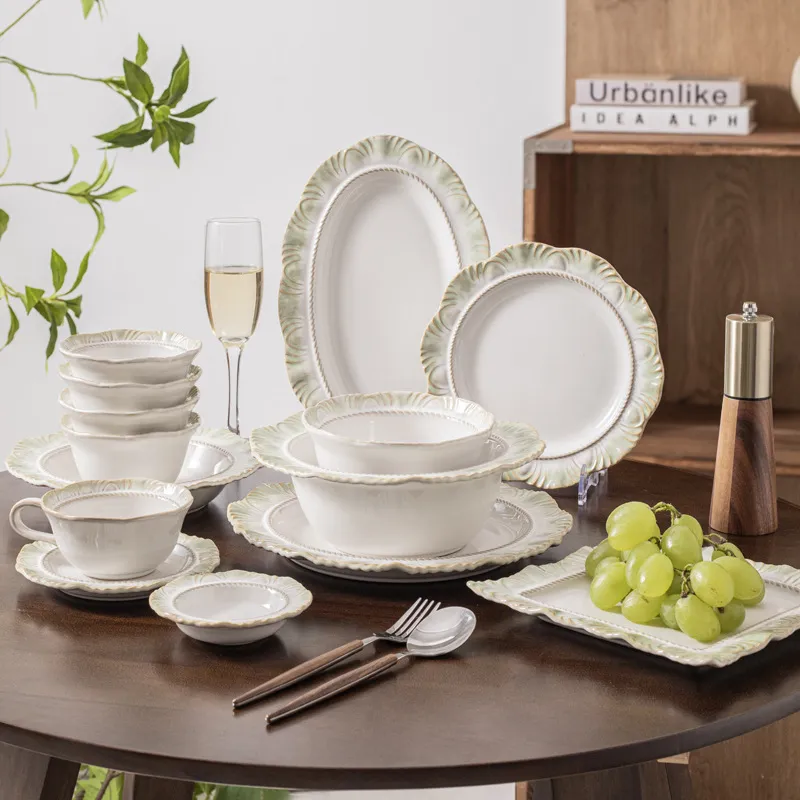
A practical range may include:
- ディナープレート
- サイドプレート
- Soup or pasta bowls
- Cereal bowls
- マグカップ
- カップ&ソーサー
- Serving plates
- サービングボウル
Not every collection needs every item.
For example, a retailer focused on everyday dining could start with a smaller combination of dinner plates, side plates, bowls, and mugs.
The goal is to create enough pieces for customers to build a complete table setting without making inventory management unnecessarily complicated.


Step 3: Create Coordination Across Shapes and Colors
A retail ceramic dinnerware collection should look connected when displayed together.
There are several ways to create coordination.
Use a Consistent Shape Language
Round plates, coupe plates, and rectangular serving pieces can create very different visual impressions.
Choose a primary shape direction and use complementary shapes for selected products.


Establish a Controlled Color Palette
Instead of offering every available color, select a manageable palette.
例えば:
- Core neutral
- Secondary neutral
- Seasonal accent
- Premium accent
This allows retailers to expand the collection without making the assortment visually inconsistent.
Coordinate Glazes and Surface Finishes
Glaze effects can help create differentiation while maintaining a unified collection.
Retailers can introduce reactive glaze, matte surfaces, embossed details, and other finishes selectively, rather than across every SKU.
The objective is not maximum variation. It is controlled variation.
Step 4: Decide Between Individual Pieces and Dinnerware Sets
Retailers should consider how customers will actually purchase the products.
Individual pieces provide flexibility. Customers can replace damaged items or create their own combinations.
Dinnerware sets can simplify purchasing and create a stronger gift or promotional proposition.
A balanced collection can use both.
例えば:
Core: Individual plates and bowls
Mid-range: Coordinated 12-piece or 16-piece sets
Premium: Larger sets with serving pieces or gift-ready packaging
This gives the retailer more ways to merchandise the same collection.
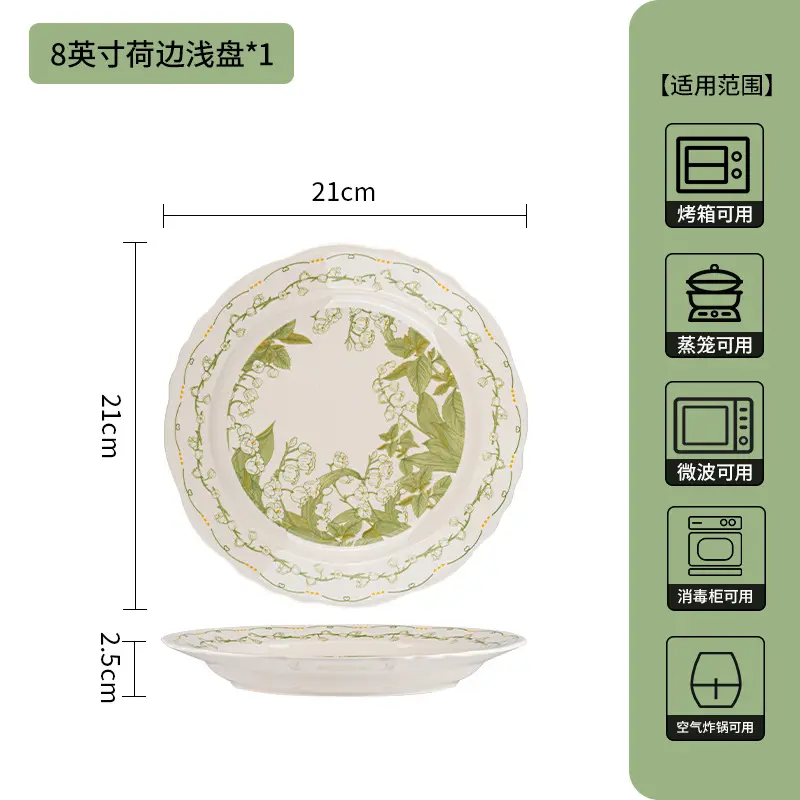
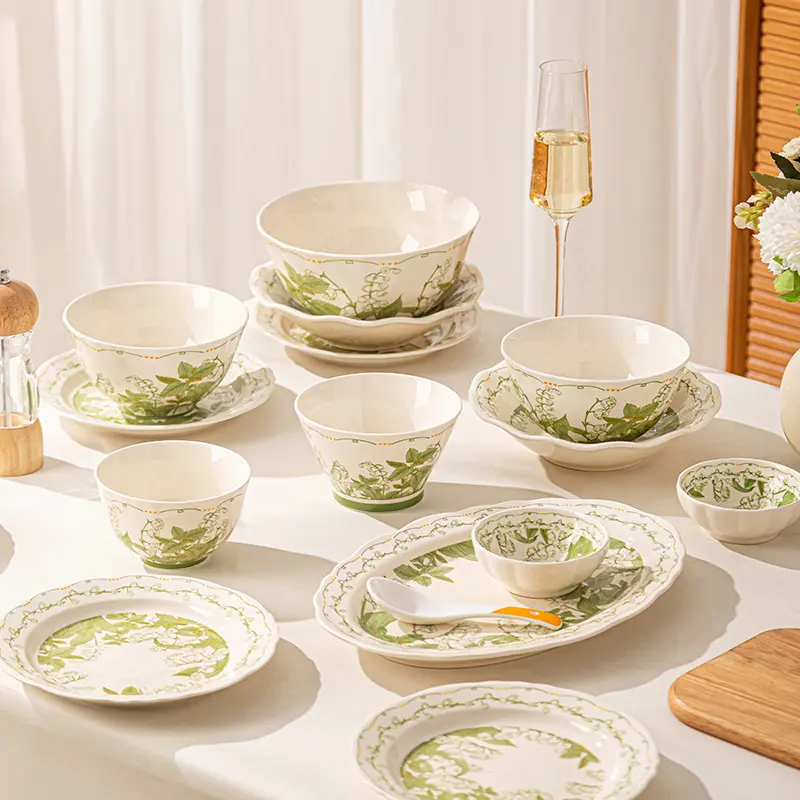
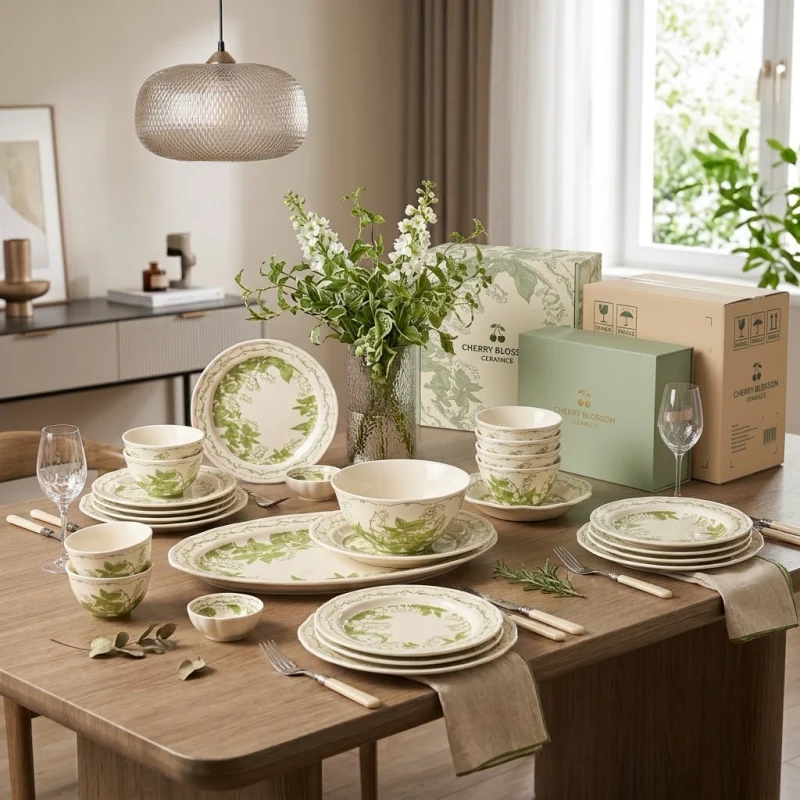
Step 5: Build Different Product Levels Without Losing the Collection Identity
A strong retail collection does not need every SKU to have the same level of decoration.
Instead, retailers can create product levels.
Everyday Core
Simple shapes, practical colors, and widely applicable designs.
Design-Led Range
More distinctive shapes, glaze effects, or decorative details.
Premium Range
Higher perceived value through more specialized design, finishes, combinations, or packaging.
This structure makes it easier for a retailer to serve different customers while maintaining a recognizable collection identity.
Step 6: Consider Packaging Before Production
Packaging should be considered as part of the product, not an afterthought.
For retail ceramic dinnerware, buyers should discuss:
- Individual product protection
- Set packaging
- Gift boxes
- Retail labels
- Barcode requirements
- Outer cartons
- Shipping protection
Ceramic products require careful packaging because breakage can directly affect the retailer’s margin and customer experience.
The packaging solution should therefore match the sales channel and transportation conditions.
Step 7: Plan Replenishment From the Beginning
A retail collection should be easy to reorder.
Before placing an initial wholesale order, ask the supplier:
- Can the same design be reproduced?
- Can the core colors remain consistent?
- What is the usual production lead time?
- Which products are suitable for repeat orders?
- Can individual pieces be replenished?
- Can packaging remain consistent?
This is especially important for retailers because a successful dinnerware collection may remain on the shelf for several seasons.
A supplier that can support both initial orders and repeat purchasing is more valuable than a supplier that only offers attractive samples.
Step 8: Choose the Right Ceramic Dinnerware Supplier
The supplier should be evaluated based on more than product appearance.
A B2B buyer should consider:
| ファクター | What to Check |
|---|---|
| Product Range | Can the supplier provide coordinated products? |
| Stock | Are ready-made products available for faster sourcing? |
| カスタマイズ | Can colors, logos, or packaging be adjusted? |
| Production | Can the supplier support repeat orders? |
| Quality | Are product standards consistent between batches? |
| パッケージング | Is the packaging suitable for retail distribution? |
| コミュニケーション | Can product requirements be handled efficiently? |
For retailers, supply consistency is part of product quality.
How Yongjian Supports Retail Dinnerware Sourcing
永建 提供する 卸売セラミック食器 for brand owners, retailers, distributors, and other B2B buyers.
Its product range covers plates, bowls, cups, mugs, baking dishes, and other ceramic tableware, giving buyers the option to build coordinated collections from multiple product categories.
For buyers who want to start from existing products, ready-made designs can help shorten the product development process. Depending on the project, customization can also be considered for elements such as colors, logos, combinations, and packaging.
This allows retailers to choose between sourcing an existing collection and developing a more differentiated private-label range.

Final Checklist for a Retail-Ready Collection
Before placing an order, confirm:
- Target customer is clearly defined
- Core SKUs are identified
- Colors and shapes are coordinated
- Retail price levels are established
- Individual pieces and sets are balanced
- Packaging matches the sales channel
- MOQ fits the purchasing plan
- Replenishment is possible
- Customization requirements are clear
- Supplier capacity has been evaluated
A successful ceramic dinnerware collection is not the one with the most designs. It is the one that gives customers enough choice while giving retailers a manageable, profitable, and replenishable product range.