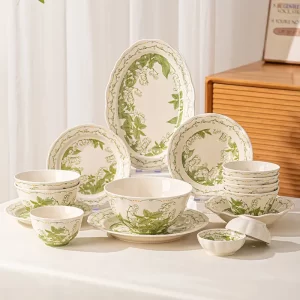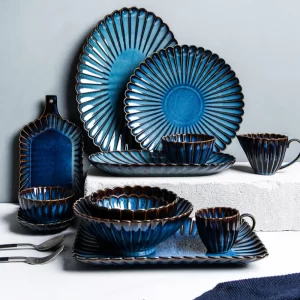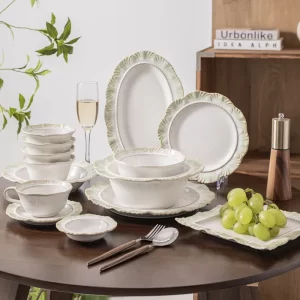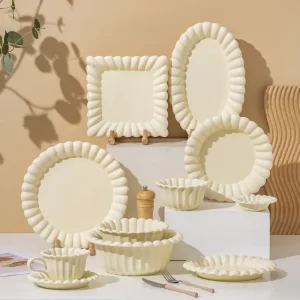

In the current year various tableware brands in the global market are not only trying to sell you their product but also projecting their way of life along with the aesthetics of their products to consumers. For restaurants, retailers and hotels a good Ceramic Plate will not only enhance the look of food, but will also contribute to building your Brand Identity. Because of this, the finish types of ceramic plates (Matte Vs. Glossy) will be a major consideration for purchasers and buyers. Which finish is better suited to your Brands Position in the marketplace? The following content will provide an Overview on how the visual effect, applicable scenes, durability characteristics, cost factors and brand style compatibility of both finishes can help in your search for a more commercially viable purchase.
Matte Ceramic Plates: Representing Modern Aesthetic and Understated Texture
Matte ceramic plates have gained forward momentum over the last few years, with many High-End restaurants, cafes, and scandinavian-style home Furnishing manufacturers adopting this style of plate. The key element of a matte ceramic plate is the use of ‘texture’, as opposed to ‘shine’. The matte texture provides an element of natural elegance, whereas the shine can create a feeling of excessive wealth through excessive light reflection.
Features and Advantages:
- Strong Visual Texture: Natural light diffusion, no glare in photos, ideal for restaurant brands to promote on social media.
- Contemporary Aesthetic Trend Alignment: Many Modern Sushi, Minimalist/Minimal, Scandinavian (Scandinavian design or Scando) Style Restaurant’s Have Similarity and are using Matte Finish Surface Treatments To Create a Refined Appeal.
- Cosy & Natural Feel: The Matte Finish is only slightly “gritty” in texture so it provides just the right amount of graininess to give the product a “cosy” and artistic feel.
Examples of Application:
For example, a restaurant specializing in healthy light meals that wants to present a “natural” and “refreshing” brand image can use a matte Ceramic Plate to make salads, grilled chicken breasts, and other ingredients look cleaner and more layered. In e-commerce channels, many high-end lifestyle brands use matte plates to photograph product images, thereby enhancing the overall visual appeal.
Important Notes:
Matte glazes are more prone to scratches than glossy glazes; therefore, buyers should choose manufacturers with highly scratch-resistant glazes. Yongjian has hardened its glaze formula to effectively reduce scratches.


Glossy Ceramic Plate: Classic, Durable, and More Versatile
Glossy Ceramic Plates are the mainstream choice for traditional ceramic tableware. Their smooth surface provides a clean and bright visual effect, suitable for presenting various dishes.
Features and Advantages:
- Glossy and Beautiful, Strong Visual Impact: Whether it’s Chinese cuisine, Western cuisine, or desserts, glossy plates offer stronger color contrast.
- Good Wear Resistance and Easy Cleaning: The high density of the glossy surface makes it less prone to absorbing oil or food residue, suitable for high-frequency use in commercial catering.
- Suitable for Multiple Brand Styles: Suitable for various applications including hotels, large chain restaurants, and supermarket sales channels.
Real-world Application Examples:
For example, a chain Italian restaurant often chooses glossy Ceramic Plates to improve food preparation efficiency and cost control. These plates are not only easy to clean but also better suit the “brightly colored ingredients + strong contrast” presentation style of Italian cuisine.
Important Notes: Glossy surfaces are prone to reflection during photography. If your brand relies heavily on visual elements, more professional lighting is required.


Durability Comparison: Glaze Finish Determines Tableware Lifespan
In commercial procurement, durability is a key indicator. The abrasion resistance of ceramic plates (matte vs. glossy) glazes is primarily related to firing temperature, glaze formulation, and factory process control.
Glossy Glazes Generally Offer Higher Abrasion Resistance
Due to their denser density and stronger stain resistance, glossy glazes are suitable for:
- Restaurants with high table turnover rates
- Hotel banquet halls
- Chain fast-moving consumer goods tableware brands
Matte Glazes Depend on Formulation and Manufacturing Experience
Traditional matte glazes are indeed more prone to knife marks, but Yongjian, through high-temperature firing (≥1200℃) and an upgraded glaze hardness formula, allows matte plates to achieve abrasion resistance approaching that of glossy plates.
Data Example (from industry testing standards):
- Glossy discs average ≥5000 abrasion resistance tests.
- High-quality matte discs can achieve 3000–4500 abrasion resistance tests.

Brand Style Positioning: How to Choose the Most Suitable Ceramic Plate for You?
Choosing a Matte or Glossy Ceramic Plate is essentially a matter of matching brand aesthetics with the usage scenario.
Brands Suitable for Matte Finish
- Brands emphasizing a “natural,” “minimalist,” and “lifestyle” style
- Boutique cafes, light food shops, Japanese restaurants
- Brands requiring extensive product photography and seeking a soft, muted tone
- Retailers aiming for high-quality displays or gift sets
Brands Suitable for Glossy Finish
- Mass-market brands, hotels, chain restaurants
- Food service channels prioritizing high table turnover and durability
- Cuisine brands requiring vibrant food colors and high contrast
- Standardized tableware products sold in supermarkets and e-commerce channels
Procurement Tips
- First, define the brand’s tone (modern minimalism vs. classic glossy)
- Assess durability requirements based on usage frequency
- Choose different processes for the logo placement, such as screen printing or water transfer printing
- Test samples for knife marks, heat resistance, and watermark issues
Cost and Supply Chain: Does Different Processes Affect Pricing?
Generally, the base cost difference between matte and glossy Ceramic Plates is not significant, but the following factors can affect the final price:
Factors Affecting Price
- Glaze Formula Complexity: Matte glazes sometimes require the addition of special particles.
- Product Shape and Size: Larger or irregularly shaped plates are more difficult to produce.
- Decorative Techniques: Techniques such as hand-painting, decals, and spray painting add to the cost.
- Order Quantity: Larger orders can better offset the cost of these techniques.
Yongjian’s advantages are:
- Lower Minimum Order Quantity: Suitable for brands testing the market or purchasing multiple styles in small batches.
- Flexible Production Model: Supports both small brands and large supermarket projects.
- One-Stop Service from Design to Mass Production: Effectively shortens the delivery cycle.

Summary
Glossy and matte ceramic plate options provide different product benefits appropriate to each company’s respective product positioning and consumer channel needs and serving styles. Matte finished plates create an artistic feel that is ideal for the modern-day brand, while glossy plate finishes have more durability, classic looks, and general flexibility for use. If your company tries to promote a visual or elite image, matte-type finishes will accentuate that image, while at the same time, if your brand focuses on practical, stable, and cost-effective materials, then glossy-type finishes may be your safest bet.
For all of these reasons, it would be best to have each company determine what type of plate to use based on their positioning, consumer, serving needs, and budgetary guidelines. Also, it is a good idea to conduct a sample trial prior to finalising the selection of plate style.
About Yongjian Ceramics
Founded in 1990. As an established leader within the ceramic tableware space, Yongjia focused on manufacturing a variety of ceramic tableware items, including ceramic plates, ceramic bowls, ceramic cups, ceramic baking dishes, ceramic spoons, and more. Through our successful experience in custom manufacturing, we have developed extensive capabilities in OEM/ODM and therefore can offer our customers tried-and-true products and external supply chain services. Our company currently has state-of-the-art production equipment and processes in place to give us the abilities to deliver top-quality products to catering and hotel companies worldwide.
Our minimum order quantity (MOQ) is very flexible and will depend on the specific item you are interested in. Please contact our sales team for further information on product pricing and sample support.

Related Products


FAQ
1. Are matte plates more prone to scratches?
Traditional matte glazes are indeed more susceptible to scratches, but this can be effectively mitigated through high-hardness glazes and high-temperature firing. Yongjian’s products meet commercial wear resistance standards.
2. Which type of ceramic plate is better for photography?
Matte plates are non-reflective, resulting in more natural photos; glossy plates have brighter colors, but may require professional lighting to avoid reflections.
3. Are glossy plates more expensive?
Not necessarily. Cost mainly depends on the glaze, size, shape, and decorative techniques.
4. Can colors and shapes be customized?
Yes, we support various glaze colors, custom sizes, special shapes, and logo designs.
If needed, I can also help you rewrite this article into an English version, optimize it for a more B2B style, or expand it into social media content.