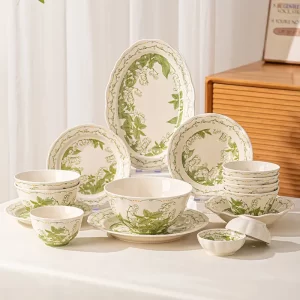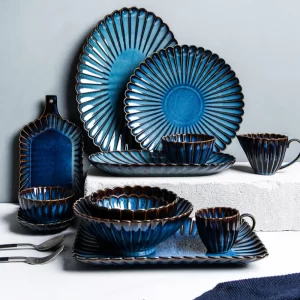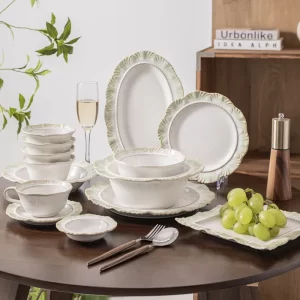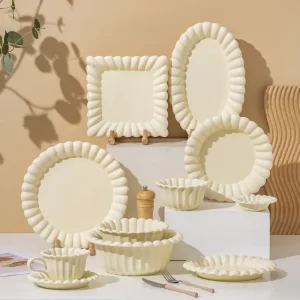

In today’s highly competitive restaurant industry, restaurants not only need to rely on the taste of their dishes to succeed, but tableware design has also become a crucial factor influencing customer experience and brand image. The choice of plate shapes directly affects plating presentation, food preparation efficiency, warehousing management, and the overall dining atmosphere. Different plate shapes not only cater to different cuisines and dish types but also impact a restaurant’s operating costs and brand image.
For buyers, chain restaurant groups, and hotel projects, striking a balance between aesthetics and practicality is a core issue that must be considered when making bulk purchases. Meanwhile, with the development of branded restaurants, more and more buyers are beginning to focus on the customization capabilities of custom ceramic plates, as well as suppliers’ production experience and flexible minimum order quantities in the wholesale restaurant plates sector.
This article will systematically analyze the application advantages, suitable cuisines, operational impact, and customization suggestions of the three mainstream plate shapes—round, square, and oval—in the catering scenario, helping to make more efficient and professional purchasing decisions.
Round Plates: The “Standard Solution” for the Food Service Industry
Of all plate shapes, round plates are undoubtedly the most widely used and mature choice. Whether in Western restaurants, Asian restaurants, or buffet systems, round plates offer high versatility.
Application Advantages
First, the round structure distributes stress evenly, resulting in greater stability after high-temperature firing and superior edge impact resistance compared to most irregularly shaped plates. This is particularly crucial for high-frequency wholesale restaurant plates, effectively reducing breakage rates and replenishment costs.
Second, round plates facilitate standardized stacking. Dishwashers, storage racks, and pallet systems are mostly designed for round plate dimensions, improving kitchen turnover efficiency by approximately 15%–20%.
Placing and Dishes Compatibility
- Steak, Pasta, Western Main Courses
- Chinese Stir-fries, Roasted Meat Platters
- Breakfast Combinations, Light Meal Sets
Round plate shapes naturally create a visual focal point, making it easier to highlight the main dish.


Customization Recommendations
For Custom Ceramic Plates projects, round plates are best suited for:
- Brand logo silkscreen/underglaze printing
- Different rim widths
- Matte/gloss glaze contrast

Especially beneficial for chain restaurants seeking brand consistency.
Square Plates: A Visual Powerhouse in Modern Dining
Square plates are one of the fastest-growing plate shapes in recent years, especially popular in fine dining and creative cuisine.
Visual Advantages
Square plates have stronger lines, creating a modern, minimalist, and upscale brand atmosphere. Their right-angled edges create a “framed plating effect,” particularly suitable for fine dining and molecular gastronomy.
Space Utilization
In warehousing and transportation, square plates typically have a higher packing utilization rate than round plates by about 8%–12%, helping to reduce international logistics costs. This is especially important for importers purchasing wholesale restaurant plates in bulk.
Suitable Scenarios for Dishes
- Japanese Sashimi Platter
- French Appetizer
- Dessert Combinations
- Creative Fusion Dishes


Usage Precautions
Square plates have relatively fragile edges and corners; pay attention to:
- Glaze Thickness
- Beveling Treatment
- Stacking Protection Design

Experienced Custom Ceramic Plate manufacturers often improve durability by thickening the edges or optimizing the firing curve.
Oval Plates: Ideal for Sharing and Main Courses
The oval shape is a “functionality-first” representative among the three mainstream plate shapes, widely used in sharing dining and main course presentations.
Restaurant Operational Advantages
Oval plates offer more horizontal space, suitable for large dishes such as whole fish, roasted poultry, and platters. Compared to round plates, their visible area increases by approximately 10%–18%, helping to enhance the “abundance” of the dish.
Cuisine Compatibility
- Chinese Banquet Dishes
- Southeast Asian Grilled Fish
- Western Whole Chicken/Ribs
- Seafood Platters
In hotels and banquet catering, oval plates are a common SKU in wholesale restaurant plates.


Plating Techniques
- Vertical placement emphasizes the length of the main dish.
- Horizontal zoning is suitable for platter combinations.
- Dark glazes enhance the contrast of ingredients.
The Impact of Different Plate Shapes on Operating Costs
When choosing plate shapes, restaurants must consider not only aesthetics but also long-term operating costs.
1️⃣ Stacking and Storage
- Round plates: Most stable when stacked.
- Square plates: Require anti-slip design.
- Oval plates: Take up the most space.
2️⃣ Breakage Rate
According to industry experience:
- Round plates have the lowest breakage rate.
- Square plates have a higher breakage rate at the corners (approximately 5%–8%).
- Oval plates are best placed in the center.
3️⃣ Cleaning Efficiency
Dishwasher tracks are mostly designed in a circular pattern; irregularly shaped plates may reduce cleaning efficiency by approximately 10%.
Therefore, large chain restaurants often adopt:
- Round plates as the main component + square plates as garnishes + oval plates for banquets.
This combination strategy balances cost and presentation.
Custom Ceramic Plates: The Brand Value of Shape Customization
With the rise of branded restaurants, custom ceramic plates are no longer limited to logo printing but have extended to shape development.
Customizable Directions
- Asymmetrical Irregular Shapes
- Wideened Ridge Designs
- Separate Structure Plates
- Embossed Texture Plates
Brand Benefits
- Increased Social Media Exposure
- Strengthened Brand Memorability
- Differentiating from Competitors
For boutique restaurants and chain brands, customized shapes have become an important means of enhancing pricing power.
How to Choose the Best Shape Combination for Wholesale Restaurant Plates?
When planning wholesale restaurant plates, buyers are advised to configure them according to usage frequency:
Usage Scenarios Recommended Shapes
- Daily Main Dishes: Round
- Creative Plating: Square
- Sharing Platters: Oval
- Banquet Events: Oval + Large Round Plate

This combination controls costs while meeting the needs of various dining scenarios.
Conclusion
Different plate shapes not only affect the presentation of dishes but also deeply relate to restaurant operational efficiency, brand style, and long-term cost control. Round plates are known for their stability and durability, square plates enhance visual design, while oval plates are irreplaceable in sharing and banquet settings.
With the accelerating trend of restaurant branding, more and more buyers are using custom ceramic plates to create a differentiated image and are purchasing wholesale restaurant plates in bulk from professional manufacturers to ensure stable quality and supply.
In purchasing decisions, it is recommended to comprehensively consider cuisine type, serving style, warehousing conditions, and brand positioning to establish a scientific system for combining plate shapes, thereby achieving the best balance between efficiency and aesthetics.
About Yongjian Ceramics
Founded in 1990, Yongjian Ceramics is a professional ceramic tableware manufacturer specializing in the production and wholesale of various ceramic tableware products, including ceramic plates, bowls, cups, baking dishes, and spoons. The company has extensive experience in the field of custom ceramic plates and can provide customized services in plate shapes, size, glaze, and craftsmanship according to customer needs.
Yongjian offers flexible wholesale restaurant plate purchasing solutions with low minimum order quantities, allowing customers to place orders flexibly. Minimum order quantity (MOQ) depends on the specific product type. Please contact our sales team for detailed information and pricing support.

FAQ
Q1: Which plate shapes is the most durable?
Round plates distribute stress most evenly and are generally more durable than square or oval plates, making them suitable for high-frequency restaurant use.
Q2: Are the MOQs for Custom Ceramic Plates high?
Requirements vary depending on the product. Most manufacturers offer flexible MOQs suitable for small to medium-sized batches for brand testing.
Q3: Can wholesale restaurant plates be purchased in mixed quantities?
Yes, it is common practice to combine different shapes and sizes according to usage scenarios to optimize inventory structure.