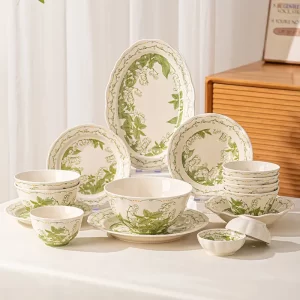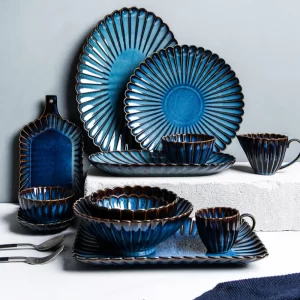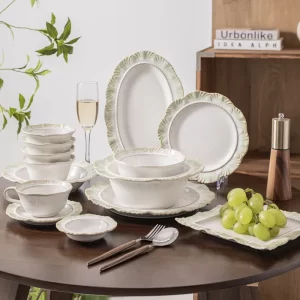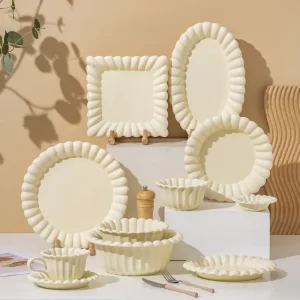

In the U.S. and European markets, selecting the right ceramic dinnerware supplier directly impacts product compliance, cost control, and long-term profitability. For importers, brand owners, and food service buyers, a reliable supplier must offer not only consistent quality and dependable delivery capabilities but also support flexible Minimum Order Quantities (MOQs) and customization services to adapt to ever-evolving market demands. This guide will help you quickly identify high-quality ceramic dinnerware suppliers, mitigate procurement risks, and make more efficient supply chain decisions.
I. Understanding Regulatory and Certification Requirements in Your Target Market
1. Core Standards in the US and EU
When choosing a supplier of ceramic tableware, your priority should be to ensure their products comply with the regulations of your target market. For example, the United States generally requires that products meet FDA food-contact safety standards, and the European Union requires compliance with standards such as the LFGB. Moreover, the levels of lead and cadmium released are important indicators for testing with legal sales implications.

2. Practical Case Studies and Recommendations
For example, some importers have incurred additional costs—including having their shipments detained at customs—due to overlooking the necessity of proper testing reports. Therefore, it is highly recommended to prioritize Ceramic Dinnerware Suppliers who can provide comprehensive testing reports (e.g., from SGS or BV). Additionally, confirm whether the supplier supports third-party testing to ensure full transparency regarding regulatory compliance.
II. Evaluating Production Capabilities and Quality Control Systems
1. Factory Scale and Process Capabilities
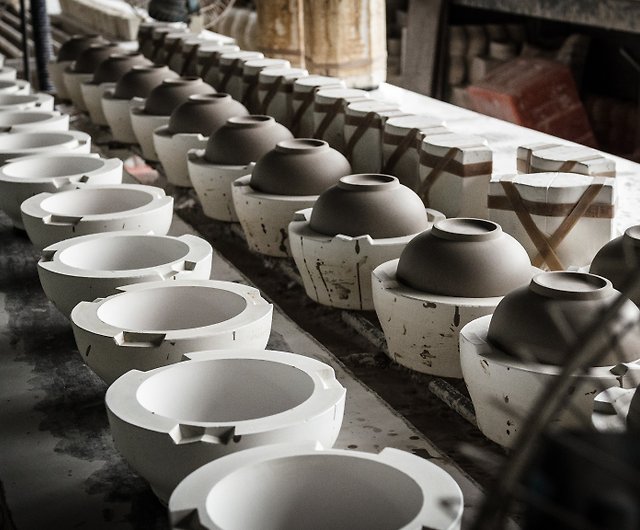
A reliable Ceramic Dinnerware Supplier typically possesses mature production lines featuring processes such as high-temperature firing, automated glazing, and standardized molding techniques (e.g., roller forming or slip casting). These processes directly impact the consistency and durability of the final products.
2. Key Aspects of Quality Control
Focus specifically on the following areas:
- Whether multiple quality inspection stages are implemented (e.g., inspections of semi-finished goods and pre-shipment inspections).
- Whether the facility possesses the capability to conduct impact resistance and heat resistance testing.
- The level of control exercised over product color variation and dimensional tolerances.
It is advisable to request samples from potential suppliers and conduct practical tests—such as dishwasher durability tests—to accurately assess how the products will perform during long-term use.
III. MOQ and Flexible Sourcing Capabilities (Crucial)
1. Why MOQ Matters
For importers or new brands, inventory pressure and cash flow are core concerns. A Ceramic Dinnerware Supplier that supports low Minimum Order Quantities (MOQ) can help clients reduce the costs associated with trial-and-error and test the market with greater flexibility.
2. Practical Recommendations
- Prioritize suppliers that support a “small-batch + multi-SKU mix” approach.
- Inquire whether different products can be mixed within a single shipment.
- Confirm whether the MOQ varies depending on the product type.
For instance, some suppliers allow mixed orders of dinner plates in various sizes—a highly favorable option for initial market testing.
IV. Customization Capabilities and Product Differentiation
1. The Importance of OEM/ODM
In the highly competitive markets of North America and Europe, relying solely on generic styles makes it difficult to establish a distinct brand advantage. Therefore, selecting a Ceramic Dinnerware Supplier that possesses strong customization capabilities is absolutely essential.
2. Customization Options
- Glaze finishes (matte, reactive glaze, hand-painted)
- Logo printing or embossing
- Shapes and dimensions (e.g., coupe plates, pasta bowls)
- Packaging design
For example, an increasing number of restaurants are gravitating toward designs featuring “reactive glazes combined with irregular edges” to enhance the dining experience and boost social media visibility.

V. Delivery Stability and Supply Chain Reliability
1. Why Delivery Timeliness Is Critical
In the North American and European markets, seasonal sales trends (such as during holiday periods) are extremely pronounced. If a Ceramic Dinnerware Supplier fails to deliver on time, it can directly result in lost orders.
2. How to Evaluate Suppliers
- Do they possess a stable supply chain for raw materials?
- Do they have the capacity to handle large-scale production runs?
- Do they have export experience (and are they familiar with FOB/CIF procedures)?
It is advisable to confirm the average lead time with the supplier and clearly define clauses regarding liability for delays within the contract to mitigate risk.

Conclusion
Selecting the right Ceramic Dinnerware Supplier is not a one-time decision, but rather a comprehensive evaluation process encompassing quality, cost, flexibility, and long-term partnership potential. For the U.S. and European markets specifically, regulatory compliance and operational stability are paramount, while low MOQs and customization capabilities directly impact market competitiveness. By systematically evaluating a supplier’s production capacity, certifications, delivery capabilities, and service levels, you can establish a more robust and efficient supply chain system, thereby standing out amidst fierce market competition.
About Yongjian Ceramics
Established in 1990, Yongjian Ceramics is a professional Ceramic Dinnerware Supplier specializing in the manufacturing and wholesale of a wide variety of ceramic tableware—including plates, bowls, cups, baking dishes, spoons, and more. With extensive experience in OEM/ODM services, the company is well-equipped to provide clients with diverse and customized solutions.
One of our key strengths lies in our flexible Minimum Order Quantities (MOQs), which accommodate clients of varying scales for both procurement and market testing purposes. The specific minimum order requirement varies by product; we invite you to contact our sales team at any time for detailed information. Driven by a commitment to consistent quality, reliable delivery, and professional service, Yongjian strives to be a trusted partner for clients worldwide.


FAQ (Frequently Asked Questions)
Q1: How can I determine if a Ceramic Dinnerware Supplier is reliable?
You can conduct a comprehensive assessment based on factors such as certifications, client case studies, sample quality, and communication responsiveness. We also recommend placing a small trial order initially.
Q2: What are the most important certifications for the European and North American markets?
For the U.S. market, the primary focus is on FDA standards; for the EU market, the emphasis is on LFGB and regulations regarding food contact safety.
Q3: Is small-batch customization available?
Most high-quality Ceramic Dinnerware Suppliers support small-batch customization to some extent; however, the specific MOQ must be confirmed based on the individual product.
Q4: What is the typical lead time?
Generally, the lead time ranges from 30 to 60 days, depending on the complexity of the order and the current production schedule.