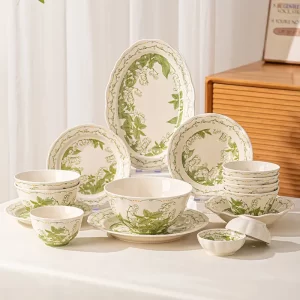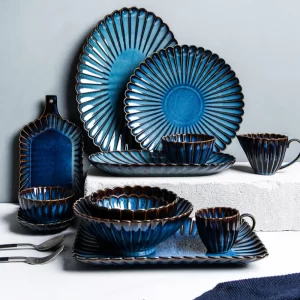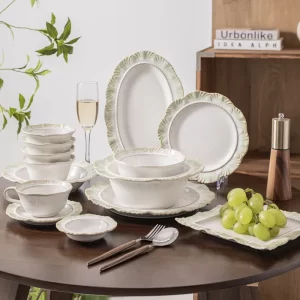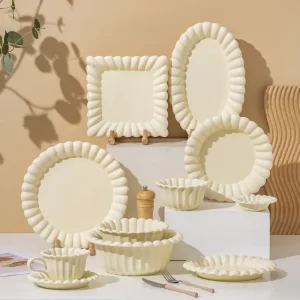
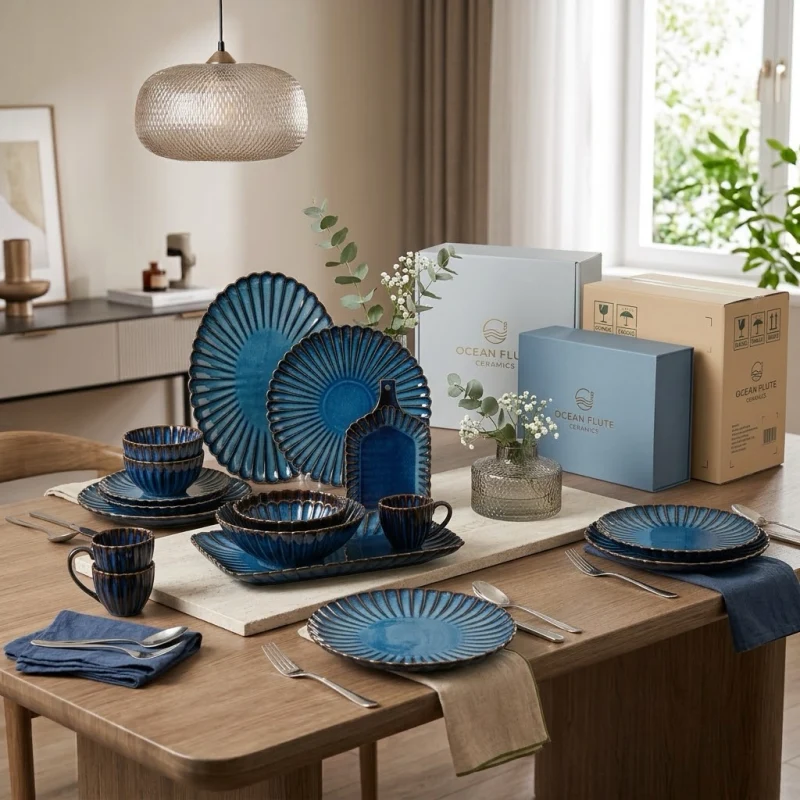
For Amazon brands, homeware brands, and retail chains, dinnerware is not merely an everyday utility item but a vital vehicle for establishing brand identity, increasing average order value, and creating product differentiation. Unlike selling generic products, Private Label Ceramic Dinnerware lets brands use their own logos, packaging, patterns, colors, and product assortments, turning standard ceramic goods into a distinctive, branded dinnerware collection.
However, for overseas buyers, sourcing Private Label Ceramic Dinnerware involves more than simply printing a logo on a plate. Factors such as material, dimensions, glaze quality, color consistency, packaging, Minimum Order Quantities (MOQs), lead times, and export experience directly impact final procurement costs and sales performance. High MOQs, in particular, can create inventory pressure for Amazon brands and small-to-medium-sized homeware brands. Therefore, selecting a supplier capable of ensuring stable production, flexible MOQs, and diverse customization options is key to successfully launching a private-label dinnerware line.
This article outlines the process of sourcing Private Label Ceramic Dinnerware—covering product selection, customization methods, MOQs, supplier evaluation, and global market sales—to help brands minimize development risks and build more competitive product lines.
1. What Is Private Label Ceramic Dinnerware?
Private Label Ceramic Dinnerware refers to ceramic tableware manufactured by a third party—either as standard stock or modified to meet specific brand requirements—and subsequently sold under the buyer’s own brand name, logo, packaging, or visual design.
Compared to standard wholesale dinnerware, the primary advantage of the private label model is that brands do not need to build a ceramic manufacturing infrastructure from scratch. Suppliers can provide existing products as a foundation, which are then adapted to align with the brand’s positioning. For instance, an Amazon homeware brand could select existing ceramic plates, bowls, mugs, and baking dishes, then add their logo, specify colors, and design custom packaging to rapidly launch a complete product series.
Common private label products include:
- Ceramic dinner plates
- Ceramic bowls
- Ceramic mugs and cups
- Ceramic baking dishes
- Ceramic serving plates
- Ceramic spoons
- Ceramic kitchenware
For brands entering the ceramic dinnerware market for the first time, it is advisable to start with established, existing styles rather than commissioning entirely new molds from the outset. Using existing products can typically shorten development cycles while reducing mold costs and inventory risks.
For instance, a new brand planning to launch a six-piece dinnerware set could select existing plate, bowl, and cup shapes, then establish its brand identity through logos, glaze colors, patterns, and packaging. This approach maintains product differentiation while keeping upfront investment under control.
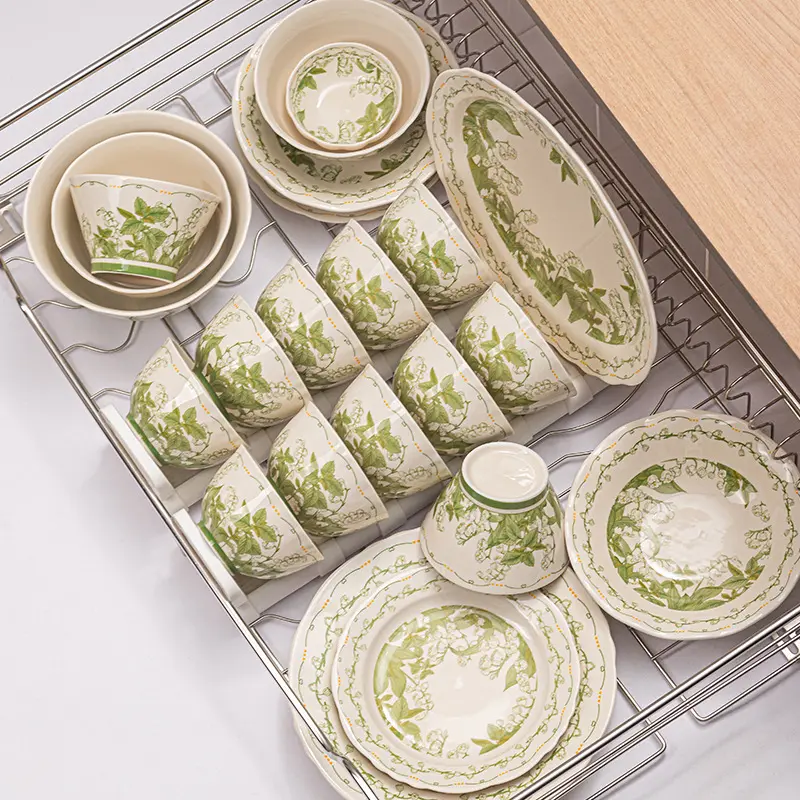
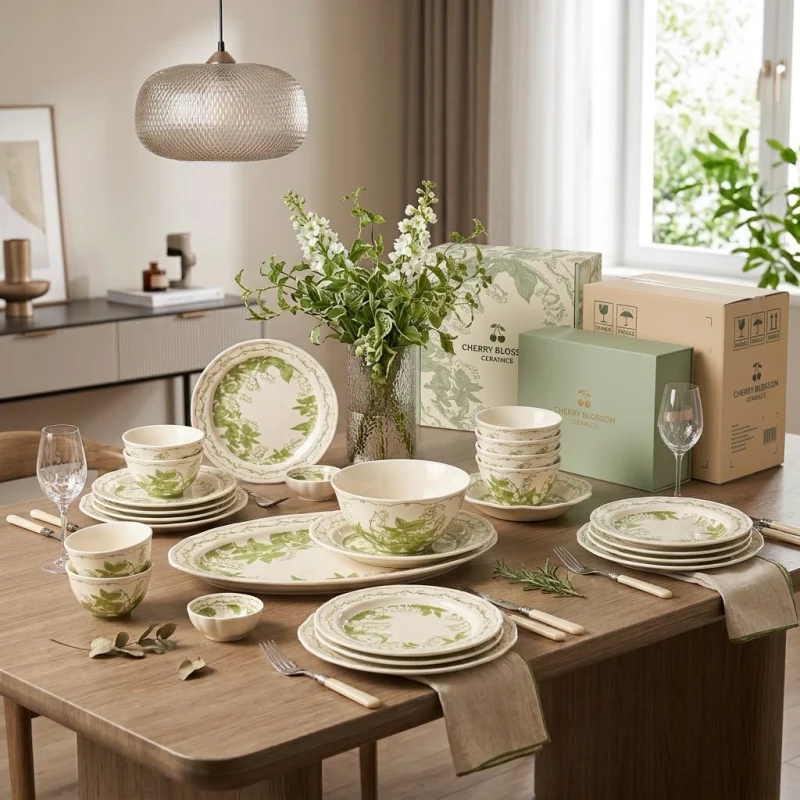
2. How to Choose Ceramic Dinnerware for Your Brand
When selecting private-label ceramic dinnerware, prioritize your brand positioning rather than simply comparing the price of individual items.
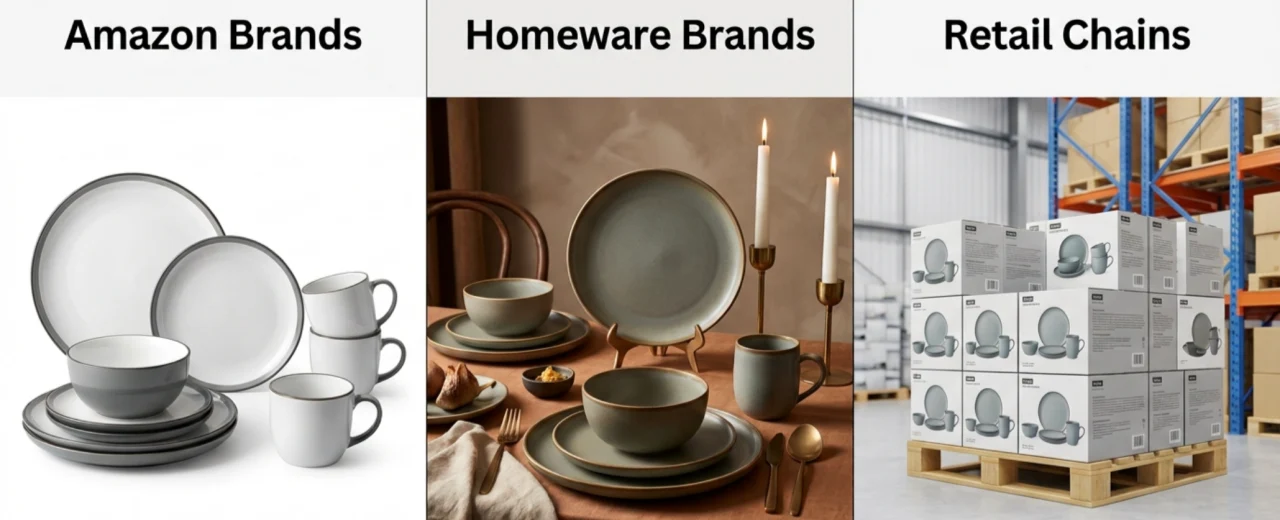
For Amazon brands, products generally need to balance visual appeal, shipping safety, pricing margins, and review performance. Homeware brands might place greater emphasis on collection style, color coordination, and product consistency. Retail chains typically focus more on supply stability, product standardization, packaging efficiency, and long-term restocking capabilities.
Buyers can evaluate products based on the following criteria:
Material and Product Performance
Different ceramic materials affect weight, strength, water absorption, appearance, and cost. Before purchasing, confirm the material and intended use, and ensure compliance with food-contact safety regulations and relevant testing standards for your target market.
Glaze and Surface Finish
The glaze directly influences the visual appeal of the dinnerware. Glossy glazes suit traditional or mass-market styles, while matte glazes are ideal for modern home brands; reactive glazes create a distinct handcrafted look and unique visual character.
If a brand plans to sell the same collection over the long term, color consistency across batches is crucial. Glazes with natural variations—such as reactive glazes—may inherently exhibit some color differences; therefore, establish color standards and acceptable ranges for visual variation before placing bulk orders.

Product Size and Weight
Size and weight are particularly important for Amazon brands. Excessively heavy ceramic dinnerware increases not only international shipping costs but also warehousing and distribution expenses. Consequently, product design must balance user experience, packaging dimensions, and logistics costs.
A simple tip: instead of asking only “How much does the item cost?”, compare the total cost, including the product, packaging, quantity per carton, carton weight, and international shipping.
3. Customization Options for Private Label Ceramic Dinnerware
The level of customization for private label ceramic dinnerware can be flexibly adjusted based on a brand’s budget and sales volume; it does not necessarily mean that every project requires creating new molds.
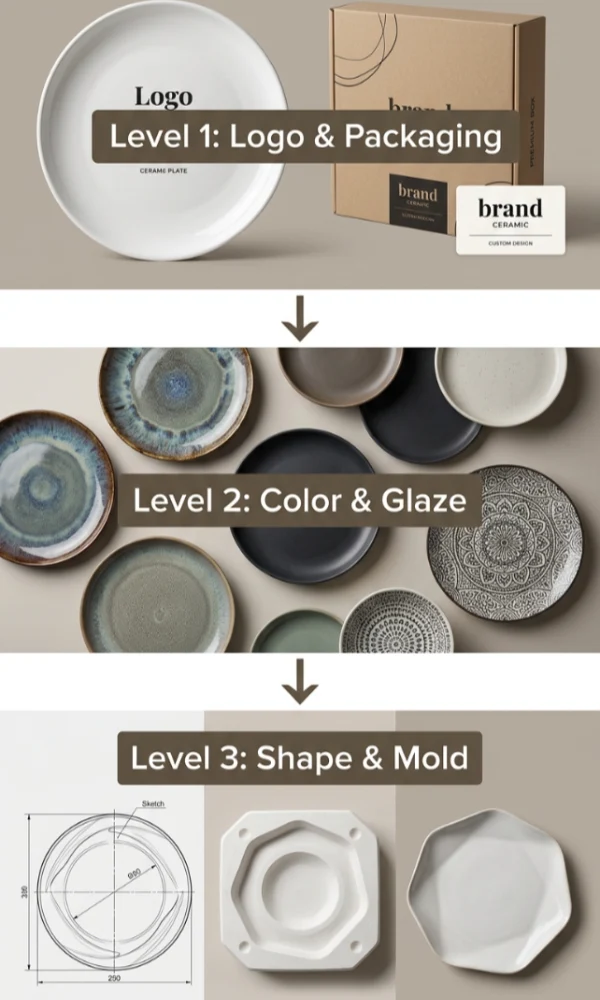
For most brands, customization can be categorized into three tiers based on depth.
Level 1: Logo and Packaging Customization
This approach is best suited for new brands and small-to-medium-sized buyers. It includes logo printing, logo decals, brand labels, color boxes, gift boxes, instruction cards, and outer carton designs.
Since this method typically does not require altering the product’s structural design, the development complexity is relatively low. Amazon brands testing the market for the first time can adopt this model to validate sales performance.
Level 2: Color, Glaze, and Pattern Customization
Once a brand has established stable sales data, it can proceed to customize colors, glaze effects, patterns, or surface finishes. For example, a standard white dinner plate could be modified to a brand-specific beige, gray, or green, paired with consistent logo and packaging designs.
This approach significantly enhances brand recognition while generally keeping costs more manageable compared to creating entirely new molds.
Level 3: Shape and Mold Customization
If a brand wishes to create unique plate or bowl shapes or incorporate specialized functional structures, developing new molds may be necessary. This represents a deeper level of custom ceramic dinnerware development, involving considerations such as mold costs, development timelines, prototyping rounds, and higher Minimum Order Quantities (MOQs).
Therefore, buyers should select the appropriate level of customization based on projected sales volume. For brands just entering the market, there is no need to incur excessive development costs simply for the sake of uniqueness.
4. MOQ: Why Flexible Ordering Matters for Global Brands
MOQ (Minimum Order Quantity) is a crucial factor when sourcing private label ceramic dinnerware.
Traditional ceramic manufacturing involves costs related to molds, glazes, kiln scheduling, and packaging, leading to significant variations in MOQs across different products. While large retail chains can benefit from bulk purchasing to amortize production costs, excessive MOQs can lead to inventory overstock for Amazon brands and emerging homeware brands. A more rational procurement strategy involves setting order volumes based on the product lifecycle:
| Product Stage | Recommended Procurement Strategy |
|---|---|
| Market Testing | Select mature, off-the-shelf items for small-batch procurement |
| Sales Growth | Increase order volume and add custom logos or packaging |
| Stable Sales | Customize colors, glazes, and product sets/collections |
| Best-sellers | Consider exclusive designs or new mold development |
Minimum Order Quantities (MOQs) are not fixed figures; they depend on the specific product, customization details, and production requirements. Therefore, when requesting a quote, buyers should not simply ask “What is the MOQ?” but should also provide information such as the product model, quantity, logo application method, color, packaging, and target market.
Yongjian can determine MOQs based on specific products and customization needs, offering buyers more flexible ordering options. For brands looking to test new products, this flexibility reduces the initial inventory investment and allows for the gradual scaling of orders based on market feedback.
5. How to Choose an OEM Ceramic Tableware Supplier
When selecting an OEM ceramic tableware supplier, one should not compare prices alone. A suitable supplier should possess capabilities in product development, quality control, and international order fulfillment, alongside extensive manufacturing experience.
Buyers are advised to focus on the following five areas:
① Product Range
Can the supplier provide a comprehensive range of products, such as plates, bowls, cups, and baking dishes? A broader product range makes it easier for a brand to create a cohesive collection.
② Manufacturing Experience
Experience in the ceramic industry impacts product consistency, glaze control, firing stability, and mass production capabilities. For long-term partnerships, in particular, stable production is more important than a low price on a single order.
③ Customization Capability
Confirm the custom ceramic dinnerware services offered—such as logo application, color, glaze, patterns, packaging, and mold development—and clarify the MOQ and development lead time for each customization method.
④ Quality Control
Before purchasing, verify the quality control procedures, including checks for dimensions, appearance, and glaze quality, as well as packaging drop tests and food-contact safety testing. For brands targeting European and American markets, ensure compliance with the specific regulations and testing requirements of the destination countries.
⑤ Supply and Reordering
Tableware brands often require ongoing restocking; therefore, buyers should clarify the processes for sample approval, mass production, packaging, container loading, and subsequent reorders well in advance.
Supply stability is crucial for retail chains, while for Amazon brands, rapid restocking can directly impact product rankings and sales continuity. Consequently, a manufacturer capable of providing a stable, long-term supply of Private Label Ceramic Dinnerware is often a better partner than a supplier who simply offers the lowest price.

Conclusion: Build a Scalable Private Label Dinnerware Line
For global brands, Private Label Ceramic Dinnerware offers an effective way to enter the ceramic tableware market, establish brand differentiation, and expand homeware product lines. Buyers do not need to invest heavily in developing entirely unique products from scratch; instead, they can start with established products and gradually build a distinctive brand identity through customization of logos, packaging, colors, and glazes.
Amazon brands can begin with low-risk, small-batch product testing; homeware brands can build complete collections around unified color schemes and designs; and retail chains should prioritize supply stability, quality control, and long-term restocking capabilities.
A truly effective sourcing strategy focuses not on finding the “lowest price” tableware, but on achieving the optimal balance between product quality, customization capabilities, MOQs, lead times, and long-term supply reliability. Partnering with a manufacturer that offers flexible ordering and tiered customization services enables brands to transition smoothly from market testing to scaled procurement.
About Yongjian Ceramics
Established in 1990, Yongjian Ceramics is a ceramic tableware manufacturer specializing in production and wholesale. Its product portfolio spans categories such as ceramic plates, bowls, cups, baking dishes, and spoons. The company maintains an inventory of over 10,000 in-stock items and exports to more than 100 countries and regions.
With long-term ceramic production and export experience, Yongjian can provide Amazon brands, homeware brands and retail chains with flexible solutions from mature product procurement to Private Label Ceramic Dinnerware customization, including logo, packaging, color, glaze and other customized needs.
Yongjian’s minimum order quantity depends on the specific product and customization requirements. Buyers can send target products, estimated quantities, customization content and market needs to the sales team, and the sales team will confirm the appropriate MOQ, price, samples and production plans, helping brands build their own ceramic tableware product lines in a more flexible way.