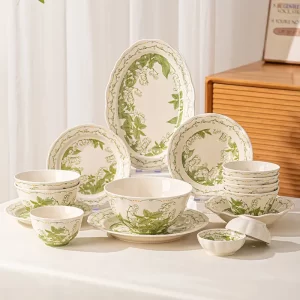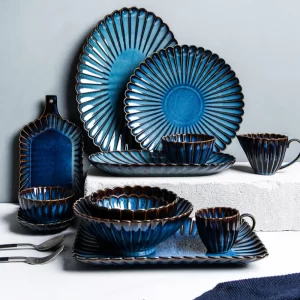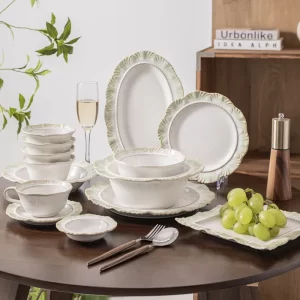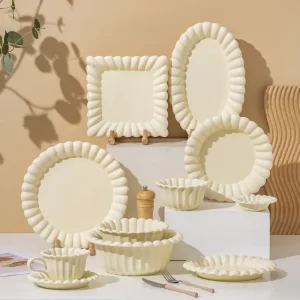
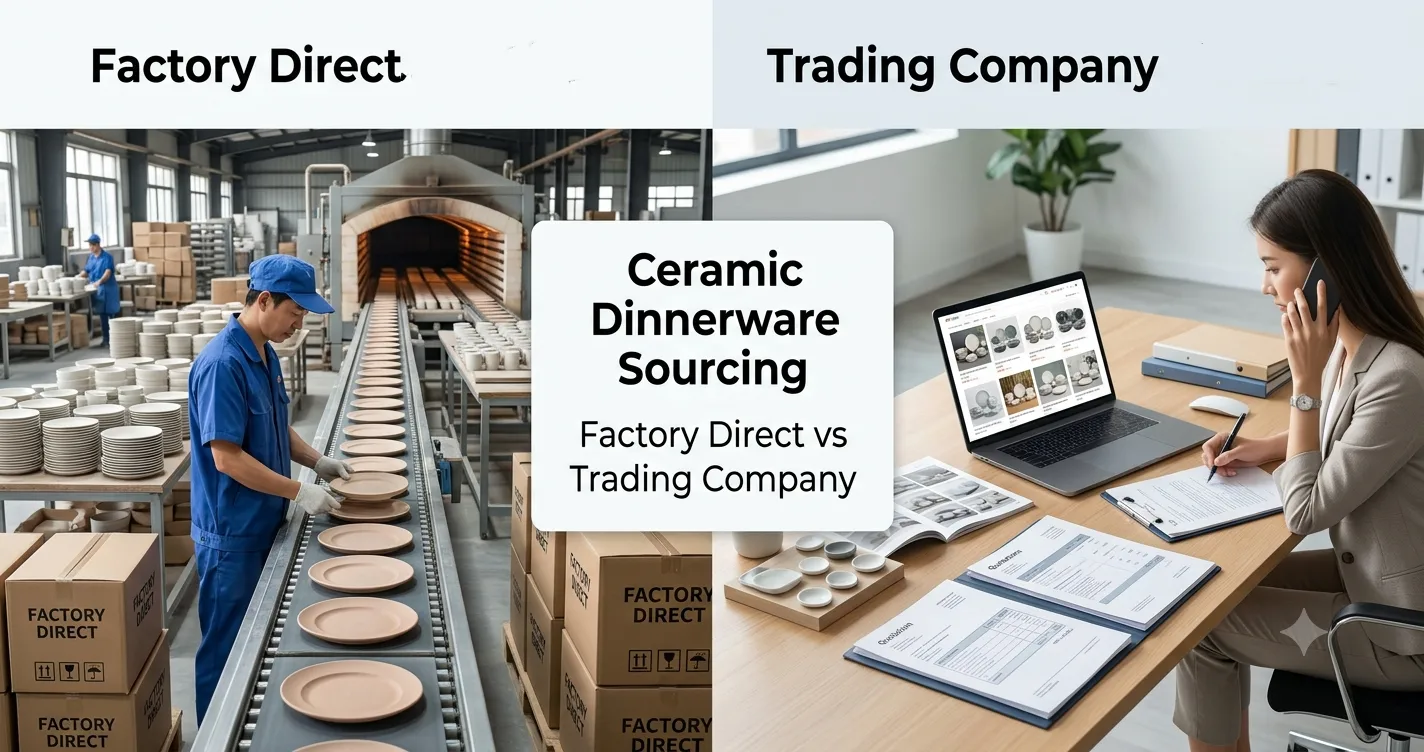
In Ceramic Dinnerware Sourcing, working directly with factories usually results in more transparent prices, more flexible customization capabilities, and more stable supply chain support, while trading companies are more suitable for buyers who require multi-category integration and rapid procurement.
Ceramic Dinnerware Sourcing Should you choose a factory or a trading company?
For overseas catering brands, wholesalers, retailers and importers, finding reliable suppliers is a key step in the process of purchasing ceramic tableware. When doing Ceramic Dinnerware Sourcing, many buyers will face a choice: find a ceramic tableware manufacturing factory directly, or purchase through a trading company?
Both models have value, but they serve different procurement needs. If your goal is long-term cooperation, product customization, cost control, and establishing a stable supply chain, factory direct supply usually has more obvious advantages. And if you need to quickly obtain products of multiple brands and categories, a trading company may be more convenient.
Understanding the difference between the two can help buyers reduce procurement risks and improve project success rates.
Core Advantages of Factory Direct Sourcing
1. More transparent procurement costs
In Ceramic Dinnerware Sourcing, price is one of the most important factors for buyers.
Purchasing directly from manufacturing plants can reduce additional costs incurred by intermediate links. Factories are able to provide more accurate quotes based on raw materials, production processes, order quantities and packaging requirements.
For example, a buyer needs to customize a set of restaurant-specific ceramic tableware, including ceramic plates, ceramic bowls, coffee cups and baking utensils. If you purchase through a trading company, the quotation usually already includes service fees and profit margins; if you contact the factory directly, you can have a clearer understanding of the product cost structure and adjust the design plan according to the budget.
2. Stronger customization and development capabilities
For brand customers, ceramic tableware is not only a product, but also a part of the brand image.
In the Ceramic Dinnerware Sourcing project, many customers need to customize the color, shape, LOGO, packaging or even develop new molds.
The factory has its own production equipment, technical team and mold development capabilities, and can directly participate in product design optimization. For example:
- Adjust the size of bowls and plates according to the dining scene;
- Develop new glaze color effects according to market trends;
- Design exclusive series according to brand positioning;
- Optimize product structure to reduce production costs.
In contrast, trading companies usually need to find cooperative factories again, and the communication link is longer in complex customization projects.
3. Easier to establish long-term supply relationships
Purchasing ceramic tableware is not a one-time transaction.
A stable supply chain requires continuous communication between both parties, including new product development, quality improvement, packaging upgrades, and market feedback adjustments.
The factory direct supply model allows buyers to communicate directly with the production team. When product quality issues arise or production details need to be adjusted, solutions can be found more quickly.
For large retailers, hotel groups and catering brands, long-term and stable manufacturing partners are more important than a single low-price purchase.

Trading Company In what situations is the procurement model suitable?
Although factory direct supply has many advantages, trading companies also have their own value.
1. Small buyers who need to purchase multiple categories
Some importers may require ceramic tableware, glass products, stainless steel tableware and kitchen supplies at the same time.
If the procurement scale is small, using a trading company can reduce the time cost of finding suppliers.
2. Enterprises lacking professional procurement teams
For buyers who have just entered the ceramic industry, trading companies can provide a certain degree of purchasing support, including:
- Product recommendations;
- Supplier matching;
*File organization; - Export process assistance.
Therefore, in the early stages of Ceramic Dinnerware Sourcing, a trading company may be a quick way to enter the market.

Comparative analysis of Factory Direct and Trading Company
| Comparison items | Factory direct supply | Trading company |
|---|---|---|
| product prices | more competitive | often include service margins |
| Customization capabilities | Strong, can develop new products | Rely on cooperative factories |
| Communication efficiency | Direct connection with the production team | Information needs to be transmitted at multiple levels |
| MOQ flexibility | Negotiable based on factory capacity | Depends on supplier resources |
| Quality control | Can directly participate in production management | Need to rely on third-party feedback |
| Multi-category procurement | Relatively limited | Strong resource integration capabilities |
From a long-term development perspective, if buyers want to build their own brands, the factory cooperation model is usually more suitable.
Three key factors that are easily overlooked in Ceramic Dinnerware Sourcing
1. Don’t just compare unit prices, but also pay attention to the “total purchase cost”
Many buyers only focus on product quotations when sourcing Ceramic Dinnerware.
But actual costs also include:
- Product rework rate;
- Packaging loss;
*Transportation space utilization; - Delivery stability;
*After-sale handling costs.
A supplier with low quotations but unstable quality may bring higher overall costs.
2. The factory’s new product development capability is more important than inventory quantity
The ceramic industry updates at a rapid pace, and consumers’ requirements for design, color and functionality are constantly changing.
An excellent manufacturer not only needs to produce existing products, but also has research and development capabilities.
For example, for the same ceramic cup, different markets may focus on:
- European and American markets like simple design and matte glaze;
- Catering customers focus on durability and stacking performance;
- Home furnishing brands focus on unique styling and packaging experience.
Factories that can respond quickly to market changes are more suitable as long-term partners.
3. Production experience determines product stability
Ceramic production involves multiple steps including clay proportioning, shaping, drying, glazing and firing.
Some seemingly simple questions such as:
- Color batch differences;
- Tableware deformation;
- Surface bubbles;
- Edge defects;
All may affect final sales.
Therefore, during the Ceramic Dinnerware Sourcing process, buyers should examine factory production experience, quality systems and export cases, not just look at product pictures.
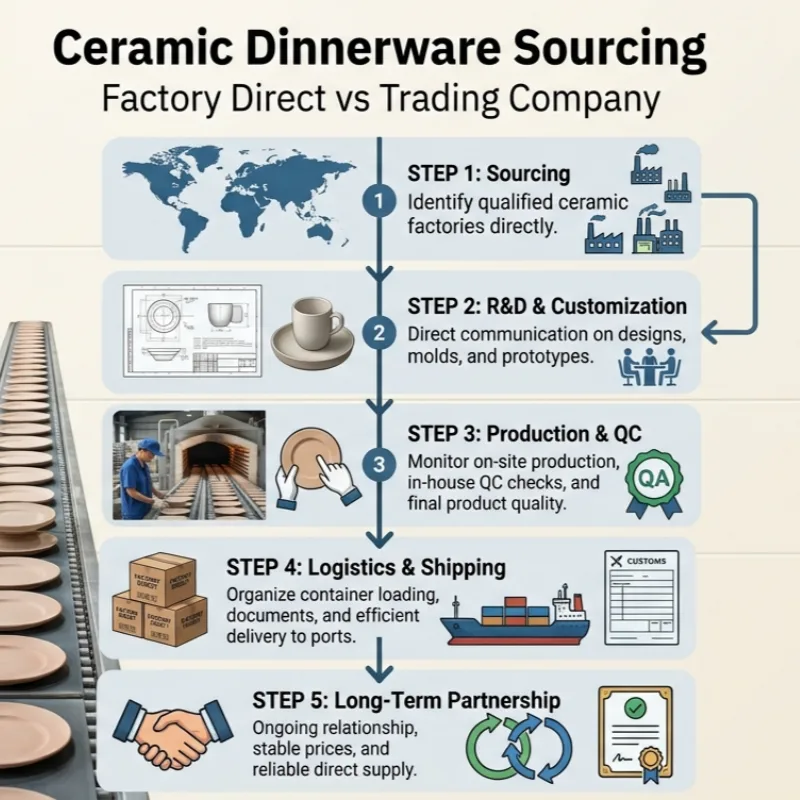
Why is Yongjian Ceramics suitable as a long-term ceramic tableware supplier?
Yongjian Ceramics, founded in 1990, is a professional Ceramic Tableware Manufacturer that has long been committed to the research and development, production and wholesale of ceramic tableware.
The company’s products include ceramic plates, ceramic bowls, ceramic cups, ceramic baking dishes, ceramic spoons and other tableware products, and it has rich experience in customizing ceramic tableware.
In the Ceramic Dinnerware Sourcing project, Yongjian not only provides mature product series, but also provides OEM and customized services according to customer needs, including product design, color adjustment, LOGO printing, packaging solutions and new product development support.
With many years of ceramic manufacturing experience, Yongjian Ceramics understands the needs of buyers in different markets and can help brand customers, wholesalers and retailers establish stable and efficient supply chains.
If you are looking for a reliable ceramic tableware manufacturing partner, welcome to contact Yongjian Ceramics to jointly develop ceramic tableware products that meet market demand.
Related Products


FAQ About Ceramic Dinnerware Sourcing
Q1: Is factory direct sourcing cheaper than buying from a trading company?
Under normal circumstances, direct supply from the factory can reduce the intermediate links, so the price is more advantageous. But the final cost also depends on order quantity, product complexity, packaging requirements and shipping method.
Q2: Can a ceramic factory provide customized dinnerware?
Yes. Professional ceramic manufacturers can usually provide OEM/ODM services, including color, size, shape, LOGO and packaging customization.
Q3: How can buyers verify a ceramic dinnerware manufacturer?
Buyers can evaluate suppliers in the following ways:
- Check the factory size and production equipment;
- Understand export experience;
- Check quality certification;
- View customer cases;
- Communicate new product development capabilities.
Q4: Is working directly with a factory suitable for small buyers?
If the buyer has a clear product direction and hopes to develop the brand in the long term, even if the order size is small, he or she can look for manufacturers that support flexible customization.